Railway OCS Solutions

Railway OCS engineering solutions: 25kV AT catenary, third-rail composite contact rail, heavy-haul reinforcement & maintenance guides.

Overhead contact systems fail where mechanical, electrical and dynamic demands meet: a neutral section that a high-speed pantograph strikes hard, a heavy-haul catenary whose tension drifts with the seasons, a metro section insulator that tracks arcs until it flashes over. Each engineering note below takes one recurring failure or design problem on mainline and urban rail, explains the mechanism behind it, and shows how Chuangwit components resolve it in practice.

The notes are written for OCS design institutes, metro maintenance depots and railway EPC contractors. They draw on the same engineering data published across this catalogue, so every recommendation links to the concrete device that implements it - compensation devices sized for the span, insulators matched to the suspension type, disconnectors rated for the section current.

  • AT-fed full-compensation catenary - how automatic tensioning keeps 25 kV AC contact wire geometry stable across seasonal temperature swings.
  • Heavy-haul high-tension catenary - reinforcement strategy for high-tonnage freight corridors.
  • Metro section insulator failure analysis - root causes of DC section insulator flashovers and the maintenance optimisation that prevents them.
Pantograph Entanglement and Dewiring: Prevention Essentials

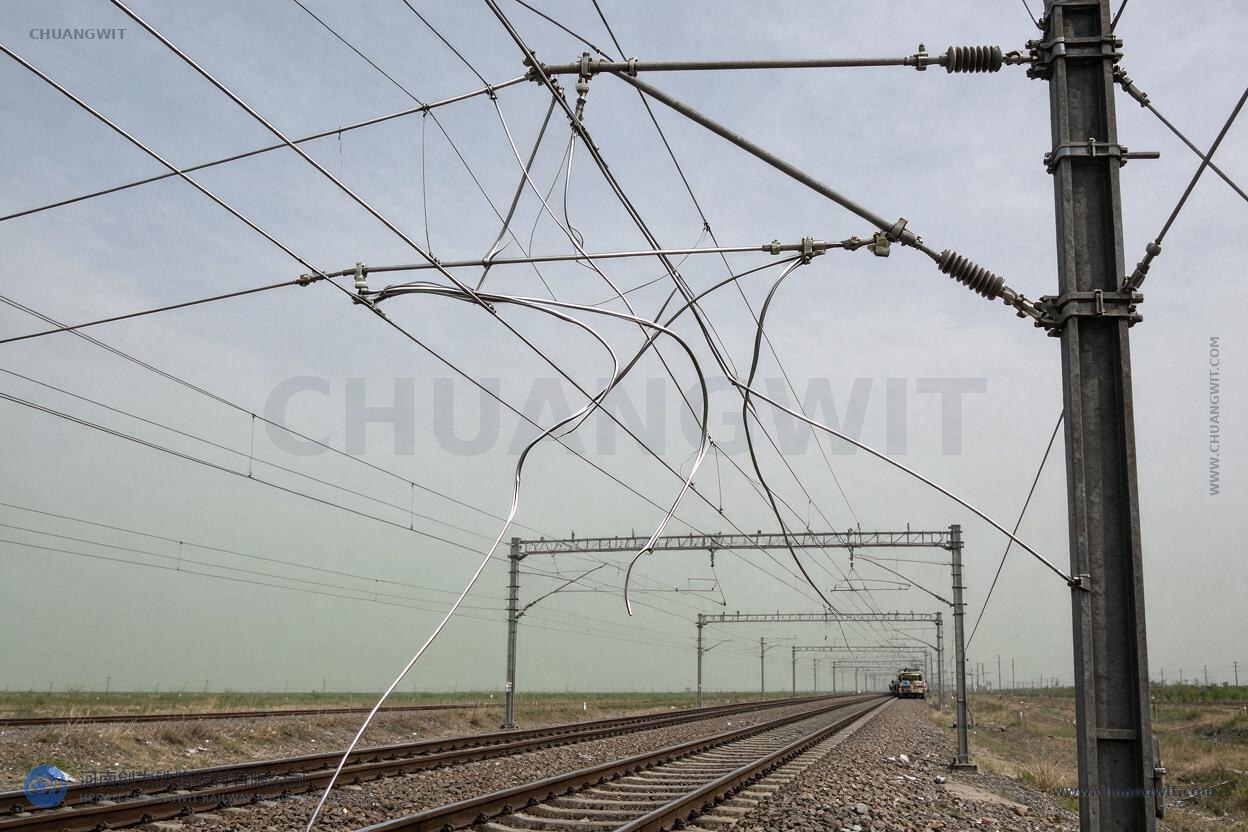
Pantograph Entanglement and Dewiring: Prevention Essentials

Pantograph entanglement and dewiring explained: what catches the pantograph head, which line defects precede it, and how...

Pantograph Contact Force: Why the Target Is Around 70 N

Pantograph Contact Force: Why the Target Is Around 70 N

Pantograph contact force explained: the EN 50367 formula 0.00097·v² + 70 N, the DC 3 kV variant, the ±10% tolerance, and...

Pantograph and Catenary Interaction: The Physics of High Speed

Pantograph and Catenary Interaction: The Physics of High Speed

How pantograph catenary interaction works at speed: wave behavior, the EN 50367 force budget, EN 50317 measurement and E...

Why Pantographs Arc and How to Reduce It

Why Pantographs Arc and How to Reduce It

Why pantographs arc: contact loss and bounce, hard spots, section insulator gaps and phase breaks, plus force and mainte...

Overhead Contact System Design: The Parameters That Matter

Overhead Contact System Design: The Parameters That Matter

Overhead contact system design fixes tension, height, stagger, spans, insulation and earthing so the contact wire follow...

Overhead Line Maintenance Windows: Planning Productive Possessions

Overhead Line Maintenance Windows: Planning Productive Possessions

Overhead line maintenance windows explained: how to plan productive railway possessions for catenary work, from isolatio...

OCS Maintenance Strategy: Moving from Reactive to Condition-Based

OCS Maintenance Strategy: Moving from Reactive to Condition-Based

OCS maintenance strategy explained: moving from reactive repairs to condition-based upkeep using 6C monitoring data spec...

OCS Inspection Technology: From Gauges to Laser Trains

OCS Inspection Technology: From Gauges to Laser Trains

OCS inspection technology from handheld gauges to laser measurement trains: contact wire wear, geometry checks and 6C mo...

Neutral Section Voltage Transients: Why Onboard Equipment Feels Them

Neutral Section Voltage Transients: Why Onboard Equipment Feels Them

Neutral section transients explained: why onboard equipment feels the crossing, the phase step physics, and device ratin...

Neutral Section Operation: What Drivers and Signage Must Do

Neutral Section Operation: What Drivers and Signage Must Do

Neutral section operation explained: why 25 kV phases must be separated, how drivers coast through the dead section, and...

Neutral Section Design: Phase Separation Between Substations

Neutral Section Design: Phase Separation Between Substations

Neutral section design on 25 kV railways: how phase separation between substations works and how devices to TB/T 3037-20...

Metal Oxide Varistors: Inside a Gapless Surge Arrester

Metal Oxide Varistors: Inside a Gapless Surge Arrester

Metal oxide varistor arresters: how ZnO blocks make gapless surge arresters work, what GB/T 11032 ratings mean, and how ...

Messenger Wire Materials and Sizes: Bronze to Copper-Clad Steel

Messenger Wire Materials and Sizes: Bronze to Copper-Clad Steel

Messenger wire materials and sizes compared: copper, bronze, copper alloy and aluminium-clad steel strands under the TB/...

Messenger Wire Installation: Stages and Mistakes to Avoid

Messenger Wire Installation: Stages and Mistakes to Avoid

Messenger wire installation stages and mistakes: stringing, sagging, droppers and anchoring, with TB/T 3111 and TB/T 207...

Live Line Indicators and Voltage Detectors: Working Safely Under Wire

Live Line Indicators and Voltage Detectors: Working Safely Under Wire

A live line indicator signals voltage on traction equipment; voltage detectors prove lines dead before earthing so crews...

How to Choose Insulators for Coastal and Polluted Rail Corridors

How to Choose Insulators for Coastal and Polluted Rail Corridors

How to choose railway insulators for coastal and polluted corridors: IEC TS 60815 severity classes, creepage targets and...

Insulator Materials Compared: Porcelain Glass and Composite

Insulator Materials Compared: Porcelain Glass and Composite

Porcelain, glass and composite insulator materials compared: strength, pollution behavior, creepage rules and failure si...

Insulation Coordination for 25kV Railways: The Standards Chain

Insulation Coordination for 25kV Railways: The Standards Chain

Insulation coordination on 25 kV railways: creepage classes to IEC TS 60815, clearances to EN 50124 and arresters to IEC...

Impedance Bonds Explained: AC Traction and Track Circuits

Impedance Bonds Explained: AC Traction and Track Circuits

An impedance bond lets heavy traction return current pass between running rails while blocking track circuit signalling ...

IEC and EN: How Standards Divide Work in Railway Electrification

IEC and EN: How Standards Divide Work in Railway Electrification

How IEC base standards and EN railway standards divide work in electrification, from IEC 60099-4 and IEC TS 60815 to EN ...

179 items · Page 4 of 9FirstPrev···23456···NextLast

Need a project-specific OCS solution?