Railway OCS Solutions

Railway OCS engineering solutions: 25kV AT catenary, third-rail composite contact rail, heavy-haul reinforcement & maintenance guides.

Overhead contact systems fail where mechanical, electrical and dynamic demands meet: a neutral section that a high-speed pantograph strikes hard, a heavy-haul catenary whose tension drifts with the seasons, a metro section insulator that tracks arcs until it flashes over. Each engineering note below takes one recurring failure or design problem on mainline and urban rail, explains the mechanism behind it, and shows how Chuangwit components resolve it in practice.

The notes are written for OCS design institutes, metro maintenance depots and railway EPC contractors. They draw on the same engineering data published across this catalogue, so every recommendation links to the concrete device that implements it - compensation devices sized for the span, insulators matched to the suspension type, disconnectors rated for the section current.

  • AT-fed full-compensation catenary - how automatic tensioning keeps 25 kV AC contact wire geometry stable across seasonal temperature swings.
  • Heavy-haul high-tension catenary - reinforcement strategy for high-tonnage freight corridors.
  • Metro section insulator failure analysis - root causes of DC section insulator flashovers and the maintenance optimisation that prevents them.
How to Install Catenary Wire: The Stages from Survey to Energization

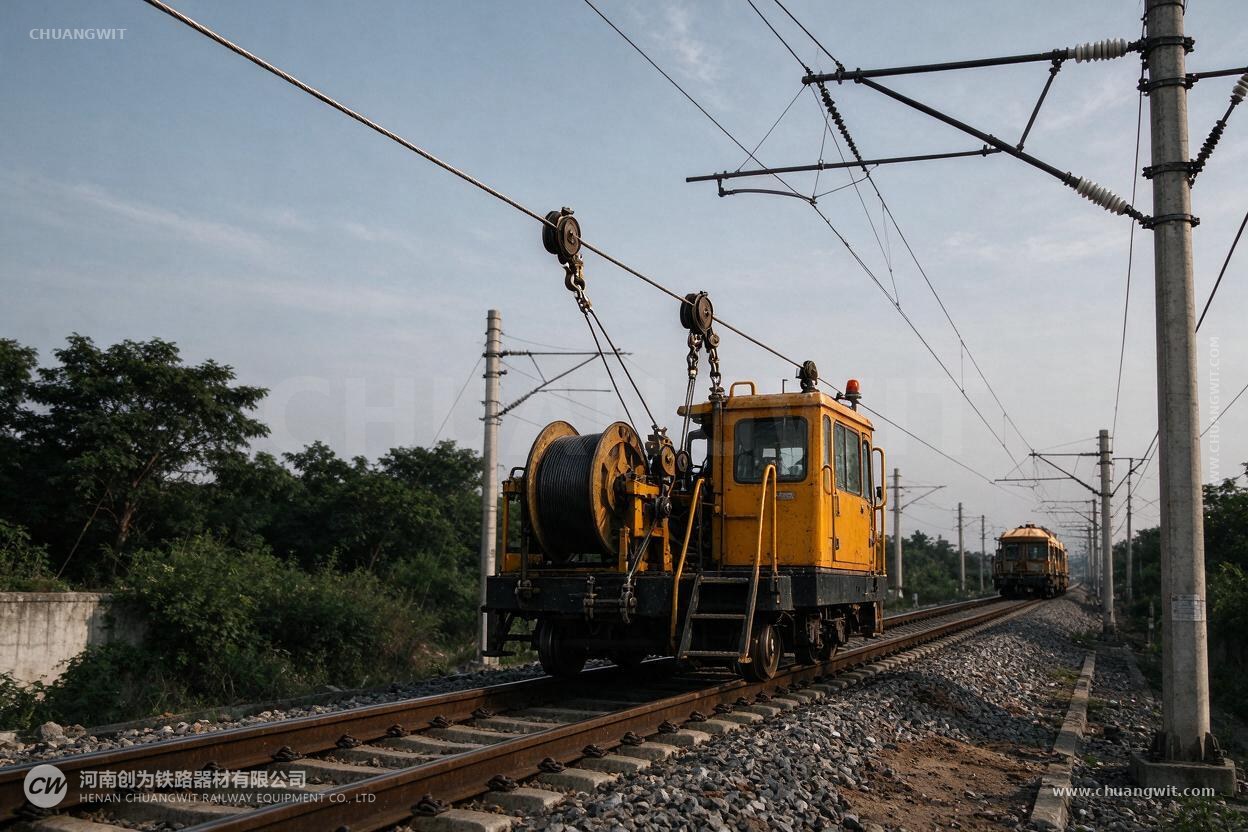
How to Install Catenary Wire: The Stages from Survey to Energization

How to install catenary wire: the full sequence from survey and supports through stringing, tensioning and droppers to t...

How Insulators Are Tested: Withstand, Impulse and Routine Tests

How Insulators Are Tested: Withstand, Impulse and Routine Tests

How railway insulators are tested: power frequency and impulse withstand, mechanical and electromechanical tests, and th...

How Electric Traction Works: From Substation to Wheel

How Electric Traction Works: From Substation to Wheel

Electric traction loops power from a traction substation through the contact wire to the pantograph and back through the...

How Does a Train Pantograph Work: Step-by-Step Mechanics

How Does a Train Pantograph Work: Step-by-Step Mechanics

How a train pantograph works: raising sequence, linkage geometry, head suspension and the EN 50367 contact force target,...

How Catenary Wires Work: Mechanics of Sag Tension and Droppers

How Catenary Wires Work: Mechanics of Sag Tension and Droppers

Catenary wires work by pairing a tensioned messenger wire with droppers that hold the contact wire level so the pantogra...

Grid to Pantograph: How Electric Traction Power Reaches the Train

Grid to Pantograph: How Electric Traction Power Reaches the Train

Electric traction power from grid to pantograph: substations, feeding posts, catenary and contact force under EN 50367, ...

Feeding and Sectioning Posts: The Small Buildings That Matter

Feeding and Sectioning Posts: The Small Buildings That Matter

Feeding and sectioning posts explained: what a sectioning post contains, what a paralleling post does, and how its disco...

EN 50206 to EN 50367: The European Contact System Standards Chain

EN 50206 to EN 50367: The European Contact System Standards Chain

The EN chain for current collection: EN 50149 wire, EN 50206 pantographs, EN 50367 force, EN 50317 measurement and EN 50...

Do All Trains Use a Third Rail? Where and Why It Exists

Do All Trains Use a Third Rail? Where and Why It Exists

No, most trains collect power from overhead lines. Where third rail systems exist, why metros choose them, and how they ...

DC Traction Return: Rail Bonding, Stray Current and Drainage Explained

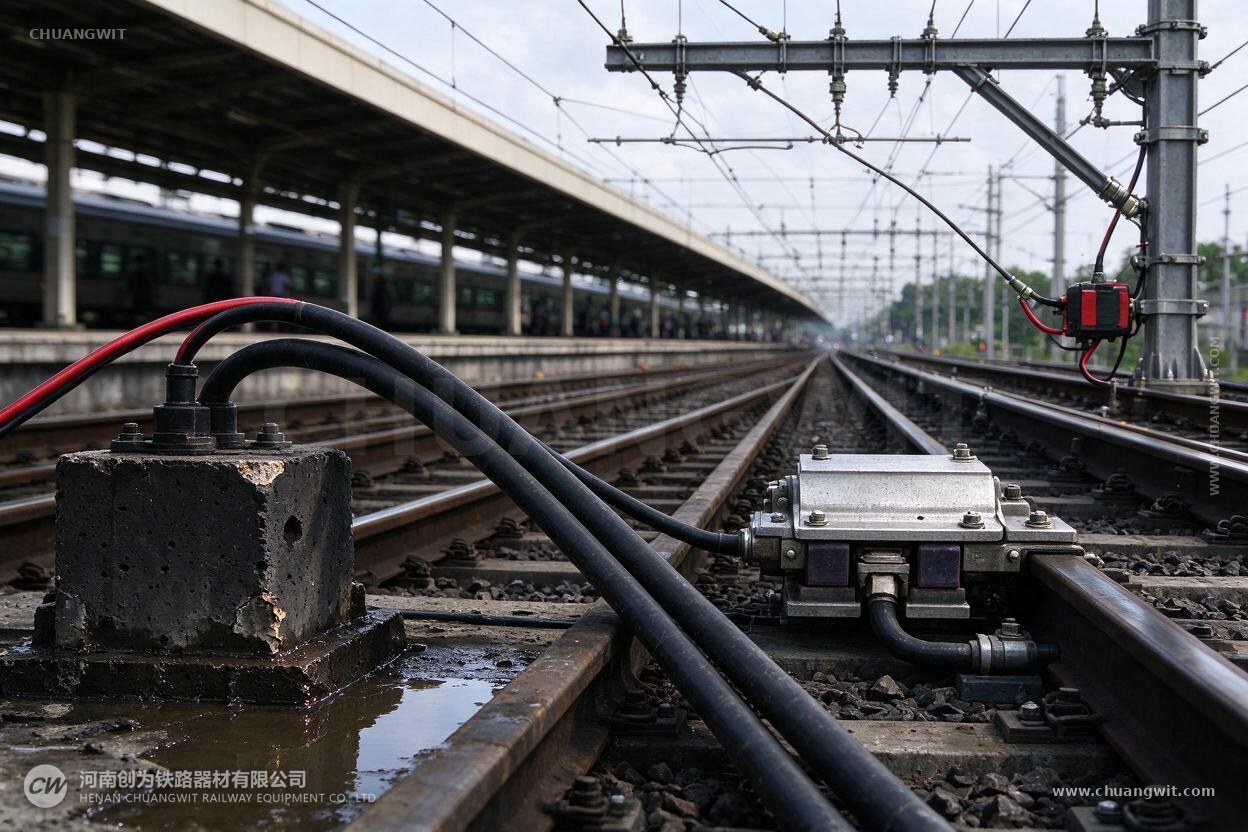
DC Traction Return: Rail Bonding, Stray Current and Drainage Explained

How DC traction return current flows back through the running rails, and how rail bonding and drainage keep touch voltag...

DC Switchgear in Metro Power: Circuit Breakers and Disconnectors

DC Switchgear in Metro Power: Circuit Breakers and Disconnectors

DC switchgear for metro traction: how DC circuit breakers, disconnectors and earthing switches divide duties across 1500...

Catenary Sag Calculation: Formula, Inputs and a Worked Example

Catenary Sag Calculation: Formula, Inputs and a Worked Example

Catenary sag calculation explained: the parabolic sag formula, tension, span and load inputs, plus a clearly labelled il...

Catenary Design Software: What Tools Actually Model

Catenary Design Software: What Tools Actually Model

What catenary design software models: static geometry and sag, pantograph dynamics per EN 50318 validation, and monitori...

Railway Catenary Corrosion: Where Steel Meets Copper

Railway Catenary Corrosion: Where Steel Meets Copper

Railway catenary corrosion: galvanic pairs of copper, steel and aluminium, galvanised masts, bimetallic transitions and ...

Carbon Pantograph Strips: Materials Wear and Replacement

Carbon Pantograph Strips: Materials Wear and Replacement

Pantograph carbon strips explained: materials, how wear develops against the contact wire, what controls strip life, and...

Autotransformer vs Booster Transformer Feeding Compared

Autotransformer vs Booster Transformer Feeding Compared

Autotransformer vs booster transformer feeding compared: how 2x25 kV AT systems and BT return conductors change losses, ...

Arrester Residual Voltage: The Number That Protects Your Insulation

Arrester Residual Voltage: The Number That Protects Your Insulation

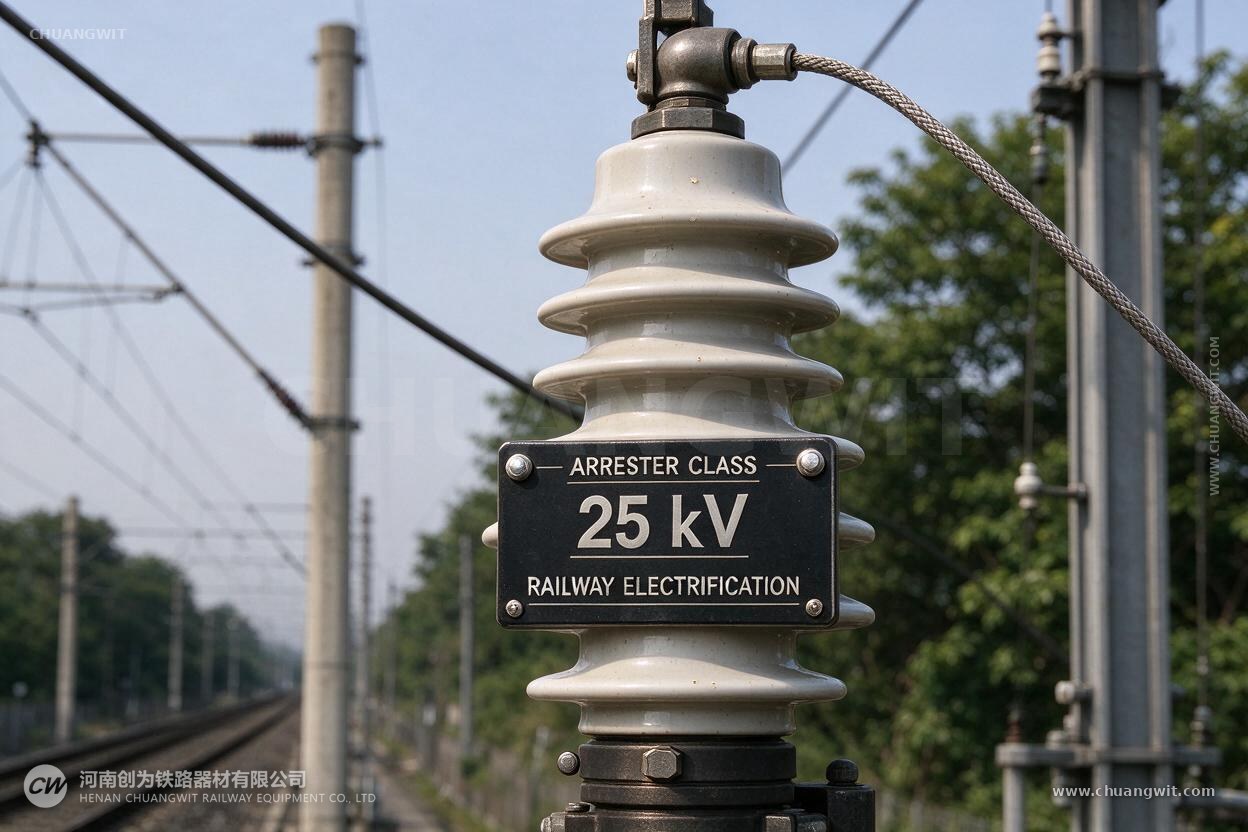
Arrester residual voltage explained: what the discharge protective level means, how it coordinates with insulation, and ...

Polymer vs Porcelain Arrester Housings: Failure Modes Compared

Polymer vs Porcelain Arrester Housings: Failure Modes Compared

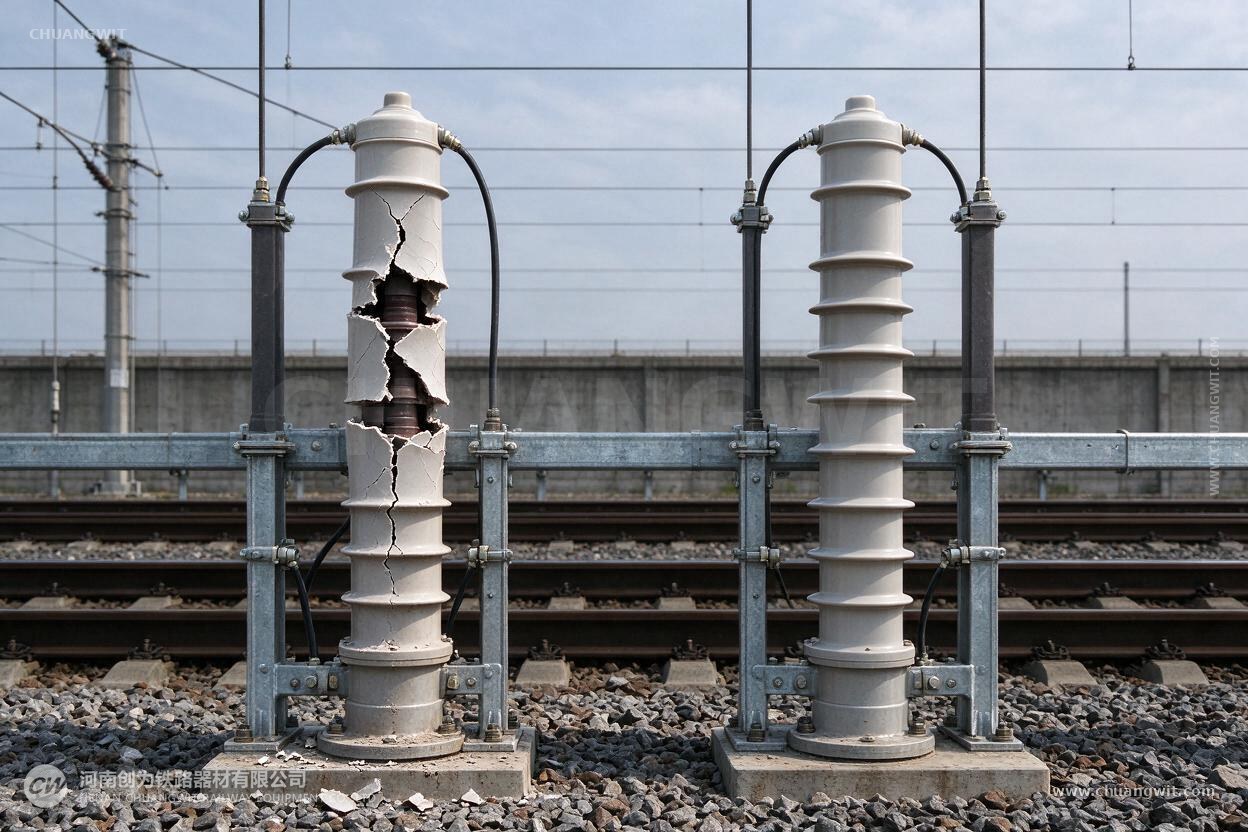
Polymer vs porcelain arrester housings: how a polymer housed arrester fails by shed tracking while porcelain shatters, a...

Arrester Energy Class and Line Discharge Duty Explained

Arrester Energy Class and Line Discharge Duty Explained

Arrester energy class and line discharge duty under IEC 60099-4 explained, plus the 5 kA and 600 A 2 ms traction ratings...

AC vs DC Traction: Why Railways Ended Up Using Both

AC vs DC Traction: Why Railways Ended Up Using Both

AC vs DC traction: 25 kV AC feeds mainlines over long distances while DC at 1.5 kV or 750 V third rail serves metros. Wh...

179 items · Page 5 of 9FirstPrev···34567···NextLast

Need a project-specific OCS solution?