A neutral section is a deliberately de-energized gap in the overhead contact system that separates adjacent feeding sections supplied from different phases of the 25 kV AC, 50 Hz network. The driver must open the main circuit breaker before the pantograph enters the dead zone, coast through on momentum, and close it again on the far side. The hardware is built to TB/T 3037-2002, the standard for phase separation insulators, with a design speed of up to 160 km/h, service from minus 40 to plus 70 degrees Celsius and altitude capability to 4,000 m.
Key Takeaways
- A neutral section separates feeding zones fed from different phases; the short pantograph-length gap between them carries no traction voltage, which is why trains must coast through with the main breaker open.
- The engineering anchor: phase separation insulators to TB/T 3037-2002, rated for 25 kV AC, 50 Hz systems, design speed up to 160 km/h, service temperatures from minus 40 to plus 70 degrees Celsius, altitude to 4,000 m.
- Operation is procedural: approach signage warns the driver, the breaker opens before the dead section, the train coasts, and the breaker closes only after the pantograph leaves the gap.
- Trackside automatic phase-breaking equipment works with the neutral section on suitably equipped lines, automating the breaker operation the driver otherwise performs.
- Passing a neutral section with the breaker closed connects two phases through the train — the resulting fault damages the phase-separation hardware and trips protection, which is what the signage exists to prevent.
What Is a Neutral Section in a Railway?
On a 25 kV AC electrified railway, successive feeding sections are fed from different phases of the three-phase utility network, so the traction voltage at their boundary is not just switched apart but phase-shifted. A neutral section is the engineered boundary: an insulating device series-mounted in the contact wire, long enough that a pantograph spans the gap only with both strips on de-energized or insulated surfaces for a moment, so the two phases can never be bridged by a train drawing power.
The distinction from a section insulator is duty, not geometry. A section insulator to TB/T 3036-2016 separates feeding zones that may share a phase, so the pantograph crosses an electrical boundary, not a phase boundary; a neutral-section device to TB/T 3037-2002 is specifically the phase separation insulator, often used together with trackside automatic phase-breaking equipment on modern lines. The comparison is drawn in full in section insulator versus neutral section insulator.
Why Do 25 kV AC Lines Need Phase Separation?
Single-phase traction loads must be balanced across the three phases of the supplying network, so adjacent traction substations, or adjacent feeding arms of one substation, are deliberately fed from different phases. Where two phases meet, no continuous contact wire can exist: a pantograph connecting both while drawing load would short-circuit phase to phase through the train. The neutral section is the accepted answer — a dead zone a few car lengths of travel wide, in which trains run on momentum.
Feeding architecture decides where these boundaries fall. On plain 25 kV feeding, phase changes occur between substation feeding arms; on 2x25 kV autotransformer feeding, the substation supplies 50 kV between catenary and negative feeder with autotransformers centre-tapped to rail roughly every 10 to 15 km, and phase separations still appear where the supply phases change; booster transformer sections introduce their own electrical boundaries. The system-level story of phase transition is told in phase transition on 25 kV railways.
How Should a Train Be Driven Through a Neutral Section?
The driving procedure is the same in every administration that uses dead sections, and signage exists to time it. Approaching the neutral section, the driver sees warning boards in the braking distance, opens the vacuum circuit breaker or equivalent main breaker before the pantograph reaches the dead zone, and stops drawing traction current. The train then coasts through the neutral section — pantograph raised, power off — and the breaker is closed again only after the rear pantograph, or the single pantograph, has left the gap and the driver sees the confirmation board.
Speed management is part of the procedure. The train must enter at a speed that carries it through, because stopping inside the dead zone leaves it without traction power: recovery means either controlled coasting out on gradient and residual momentum under dispatcher direction, or special recovery arrangements. Regenerative braking must be off through the section for the same reason the traction load must be off — no current may be exchanged across the gap. Experienced drivers plan the approach so the passage costs nothing in schedule: full momentum at entry, breaker closed within seconds at the far board.
Modern practice automates the timing on equipped lines. Trackside automatic phase-breaking equipment, which phase separation insulators to TB/T 3037-2002 are specifically intended to work with, detects the approaching train and operates the breaker at the right moment, removing the human timing error from the routine. The device-level view — structure, working principle and selection of the insulators themselves — is in the neutral section insulator guide.
What Signage and Trackside Equipment Mark the Dead Section?
Signage is the interface between the electrical design and the driver, and each board answers one operational question. The table is representative of the layered signage found along the approach to and through a dead section.
| Trackside element | Function | Crew response |
|---|---|---|
| Advance warning board | Announces the neutral section in the braking distance ahead | Prepare the power-off sequence and confirm train speed |
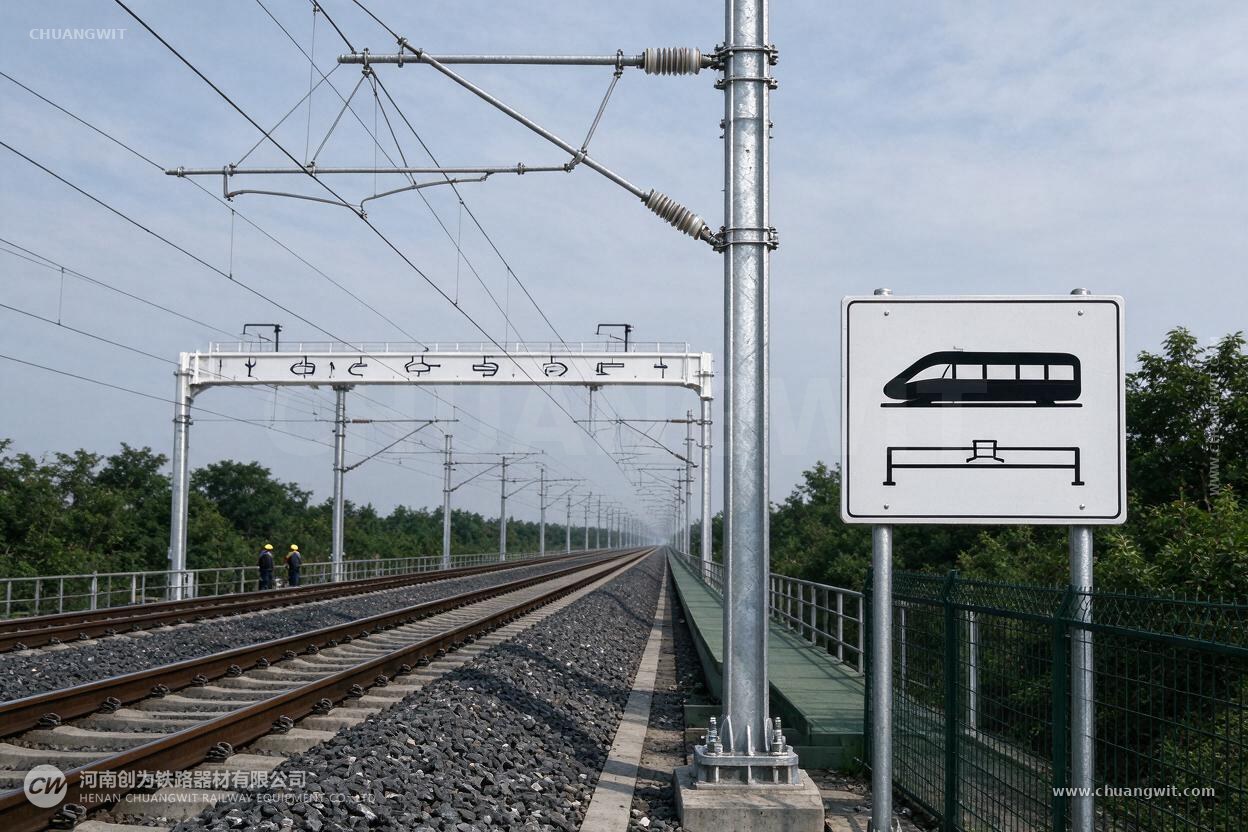
| Power-off (dead section start) board | Marks where the pantograph is about to enter the de-energized zone | Open the main breaker before passing the board |
| Neutral zone itself | The dead span between the insulated ends of the two feeding sections | Coast through with all traction power off |
| Power-on (dead section end) board | Marks where the pantograph is fully on the next feeding section | Close the breaker and resume traction |
| Automatic phase-breaking equipment, where fitted | Operates the breaker at the correct timing on equipped lines | Verify correct operation; retain manual procedure as fallback |
Source: representative neutral section signaling practice alongside phase separation insulators to TB/T 3037-2002, intended for use with trackside automatic phase-breaking equipment.

Two details make signage systems work in practice. First, boards are spaced for the braking and timing characteristics of the traffic on that line, which is why neutral section signage is part of the electrification design, not generic furniture. Second, the neutral zone must be long enough for the longest pantograph spacing and highest permitted speed, so the zone geometry and the boards are designed together with the phase-separation hardware.
What Happens If a Neutral Section Is Passed Incorrectly?
The failure mode is unforgiving. If the breaker is still closed as the pantograph spans the boundary between two phases, the train becomes a phase-to-phase connection; protection trips, and the arc at the contact surface can burn the contact wire, damage the pantograph carbon and damage the phase-separation device itself. If the breaker is closed while the pantograph still stands on the dead span, the train energizes a zone that was designed to stay dead. Either error converts a routine passage into a fault with hardware consequences.
The maintenance side of that damage — arcing root causes on insulating devices and their prevention — is covered in section insulator arcing and burning, and the boundary questions designers and maintainers ask most, including neutral-section practice, in the section insulator FAQ.
Frequently Asked Questions
What is a neutral section in a railway?
It is a deliberately de-energized gap in the overhead contact system separating feeding sections fed from different phases of the 25 kV AC network. The gap prevents a pantograph from bridging two phases while drawing power. Trains coast through with the main breaker open; the phase separation insulators are built to TB/T 3037-2002, rated for 25 kV AC, 50 Hz service with design speeds up to 160 km/h.
What is the neutral zone in a railway?
The neutral zone is the dead span itself — the section of contact line between the insulated ends of two adjacent feeding sections where no traction voltage is present. Its length must cover the pantograph arrangement and speed of the traffic using it. Drivers treat it as off-limits for traction power: enter with momentum, coast through, and resume power only after the pantograph is fully clear on the far side.
What is a neutral section in Indian Railways?
On Indian 25 kV AC electrification a neutral section is the same engineering device: an insulated dead zone between feeding sections fed from different phases, marked by power-off and power-on boards that drivers obey by opening the vacuum circuit breaker and coasting through. The hardware worldwide follows the same duty — phase separation insulators such as the TB/T 3037-2002 type, design speed up to 160 km/h, service from minus 40 to plus 70 degrees Celsius.
What is the difference between a section insulator and a neutral section?
A section insulator separates feeding zones that may share a phase — the pantograph crosses an electrical boundary while staying on one supply. A neutral section separates zones fed from different phases, so the span between them is dead and trains must cross it with the breaker open. The first is standardized under TB/T 3036-2016, the second under TB/T 3037-2002, and the two work together at phase-break locations.
Operating the Boundary Reliably
Neutral sections fail only when the procedure fails: the hardware is designed, tested and signed for, but the passage depends on a driver, a set of boards and — on equipped lines — automatic phase-breaking equipment working in the right order. Route knowledge, honest signage spacing and drilled fallback procedures keep the routine boring, which is the goal.
For phase-separation hardware to TB/T 3037-2002, signage-coordinated neutral section layouts, or the cost structure of the insulating devices involved — also covered in section insulator price factors — contact our engineering team.