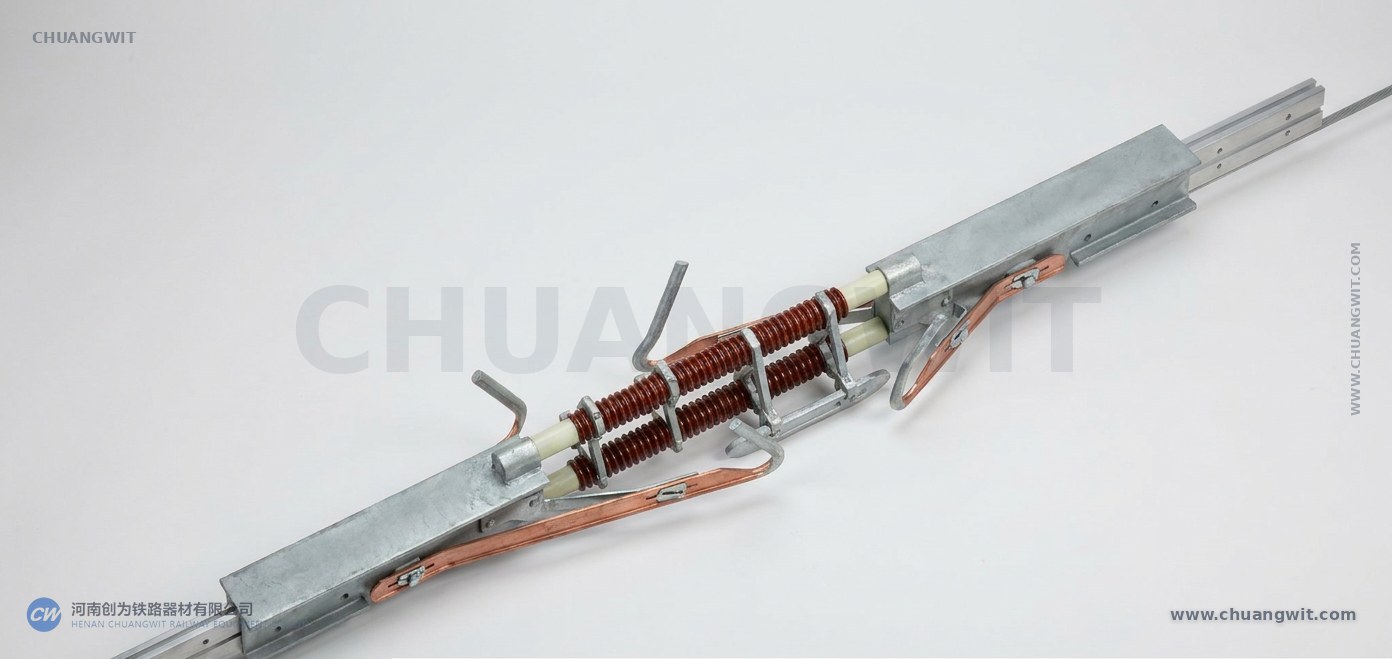
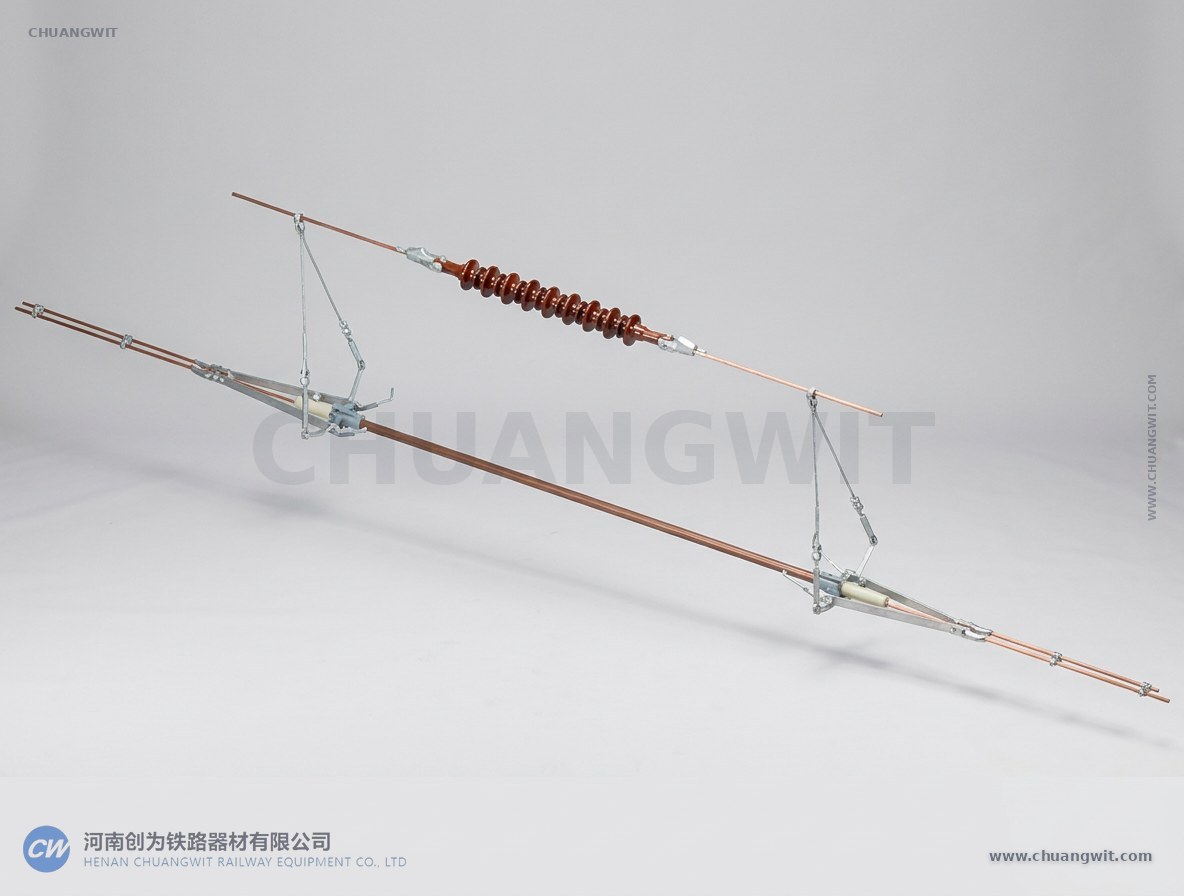
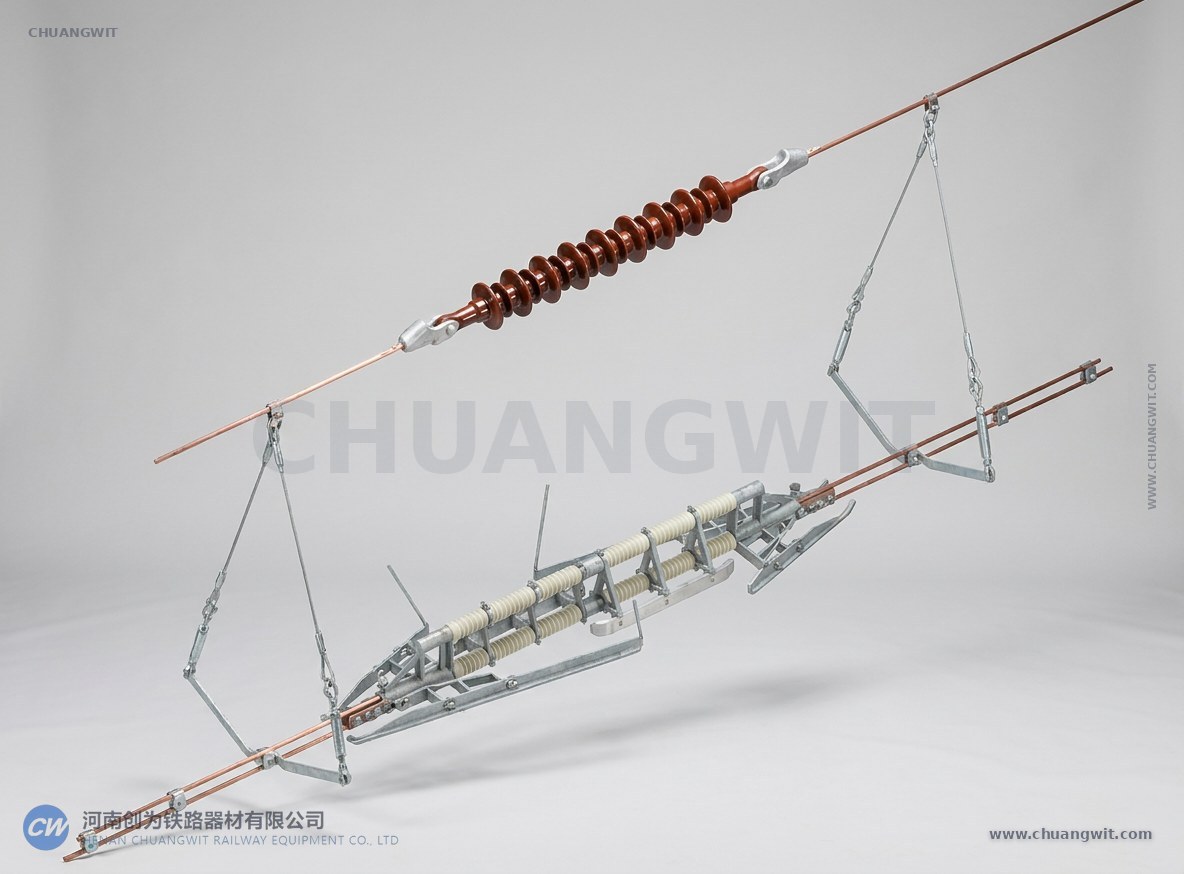
Railway OCS Solutions

Railway OCS engineering solutions: 25kV AT catenary, third-rail composite contact rail, heavy-haul reinforcement & maintenance guides.

Overhead contact systems fail where mechanical, electrical and dynamic demands meet: a neutral section that a high-speed pantograph strikes hard, a heavy-haul catenary whose tension drifts with the seasons, a metro section insulator that tracks arcs until it flashes over. Each engineering note below takes one recurring failure or design problem on mainline and urban rail, explains the mechanism behind it, and shows how Chuangwit components resolve it in practice.

The notes are written for OCS design institutes, metro maintenance depots and railway EPC contractors. They draw on the same engineering data published across this catalogue, so every recommendation links to the concrete device that implements it - compensation devices sized for the span, insulators matched to the suspension type, disconnectors rated for the section current.

  • AT-fed full-compensation catenary - how automatic tensioning keeps 25 kV AC contact wire geometry stable across seasonal temperature swings.
  • Heavy-haul high-tension catenary - reinforcement strategy for high-tonnage freight corridors.
  • Metro section insulator failure analysis - root causes of DC section insulator flashovers and the maintenance optimisation that prevents them.
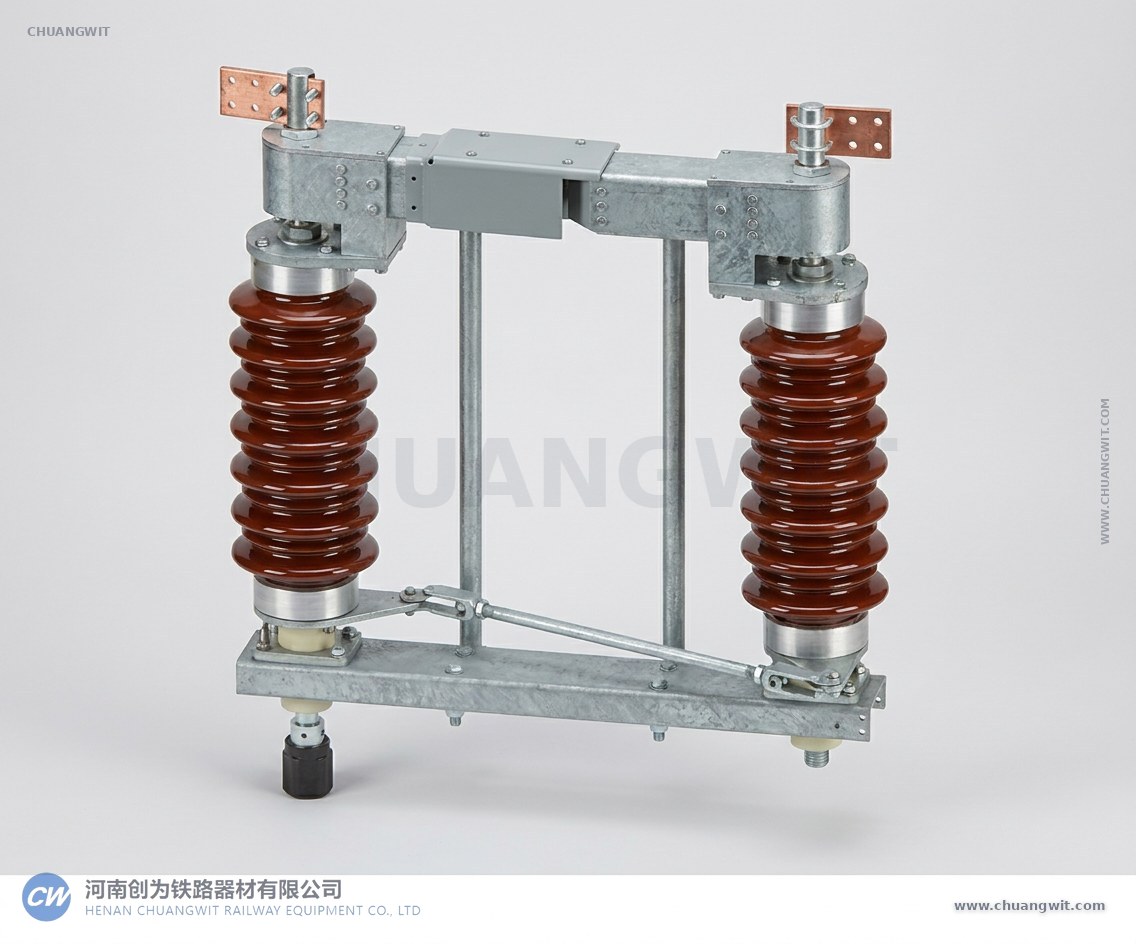
Railway Disconnector FAQ: Symbols, Ratings and Maintenance

Railway Disconnector FAQ: Symbols, Ratings and Maintenance

Railway disconnector FAQ: what diagram symbols mean, how ratings are read, why no arc chutes, manual or motorised operat...

Contact Wire Wear Limits: Measurement Methods and Replacement Criteria

Contact Wire Wear Limits: Measurement Methods and Replacement Criteria

Contact wire wear limit: mechanics, localised wear points, residual height gauges, laser measurement, renewal thresholds...

Messenger Wire Materials and Selection: JTM, JTMH and Composite Cores

Messenger Wire Materials and Selection: JTM, JTMH and Composite Cores

Messenger wire materials guide: JT hard copper, JTM/JTMH copper-magnesium and LBGLJ aluminium-clad steel strand, with st...

Vacuum Interrupter Maintenance: Contact Wear, Life Assessment and Testing

Vacuum Interrupter Maintenance: Contact Wear, Life Assessment and Testing

Vacuum interrupter maintenance explained: tracking contact wear, assessing vacuum integrity, mechanism lubrication, timi...

Disconnector Failures in Winter: Icing, Corrosion and Wildlife

Disconnector Failures in Winter: Icing, Corrosion and Wildlife

Disconnector icing, corrosion and wildlife faults explained, with countermeasures from anti-bird switch designs to greas...

Disconnector vs Switch Disconnector vs Circuit Breaker Explained

Disconnector vs Switch Disconnector vs Circuit Breaker Explained

A clear guide to disconnector vs switch disconnector differences and where circuit breakers fit: making and breaking dut...

DC Disconnectors for Metro and Urban Rail: 1500 V and 3000 V Applications

DC Disconnectors for Metro and Urban Rail: 1500 V and 3000 V Applications

A guide to DC disconnector metro applications: feeder isolation in tunnels and depots, ratings, enclosure choices and ma...

Electric vs Manual Operating Mechanisms for Railway Disconnectors

Electric vs Manual Operating Mechanisms for Railway Disconnectors

Comparing disconnector operating mechanism options: electric CJ-2 motor drives with SCADA control versus manual CS-2 and...

Section Insulator FAQ: 15 Questions Designers and Maintainers Ask Most

Section Insulator FAQ: 15 Questions Designers and Maintainers Ask Most

Section insulator FAQ: 15 answers on parts names, diagrams, speed limits, AC and DC variants, inspection intervals, fail...

Vacuum Circuit Breakers for Traction Power: Substation and Onboard Duty

Vacuum Circuit Breakers for Traction Power: Substation and Onboard Duty

How vacuum circuit breaker designs serve railway traction: substation feeder duty, onboard locomotive main breakers and ...

Installing OCS Disconnectors: Clearances, Drive Rods and Interlocks

Installing OCS Disconnectors: Clearances, Drive Rods and Interlocks

A field guide to OCS disconnector installation: mounting, electrical clearances, drive rod alignment, auxiliary wiring, ...

Earthing Switches in Overhead Contact Systems: Safe Working Earths

Earthing Switches in Overhead Contact Systems: Safe Working Earths

Earthing switch practice for railway OCS: where earths are applied at section posts, depots and portals, and how interlo...

Phase Transition on 25 kV Railways: How Neutral Sections Protect the System

Phase Transition on 25 kV Railways: How Neutral Sections Protect the System

Phase transition on a railway electrified at 25 kV: why substations feed from different grid phases and how neutral sect...

Section Insulator Length and Weight: Quick Reference for Designers

Section Insulator Length and Weight: Quick Reference for Designers

Section insulator length and weight explained: what drives dimensions, how aluminium bodies and insulation add mass, and...

Rigid Section Insulators for Metro Tunnel Conductor Rail Systems

Rigid Section Insulators for Metro Tunnel Conductor Rail Systems

Rigid section insulators for metro tunnels: how DC 1500 V sectioning works, joint tolerances, and how rigid devices diff...

Neutral Section Insulator: Structure, Working Principle and Selection

Neutral Section Insulator: Structure, Working Principle and Selection

Neutral section insulator guide: structure, working principle, phase separation duty on 25 kV lines, and the selection c...

Section Insulator vs Neutral Section Insulator: What Is the Difference

Section Insulator vs Neutral Section Insulator: What Is the Difference

Section insulator vs neutral section: same-phase maintenance isolation versus unpowered phase separation, and how placem...

Section Insulator Arcing and Burning: Root Causes and Prevention

Section Insulator Arcing and Burning: Root Causes and Prevention

Section insulator arcing causes and prevention: why arcs concentrate at runners, the damage patterns they leave, and the...

Pantograph Section Insulator Passage: How Contact Survives the Transition

Pantograph Section Insulator Passage: How Contact Survives the Transition

Pantograph section insulator passage explained: ramping onto runners, sliding across insulation, bridging the air gap, a...

Section Insulator Speed Limits: Why Design Speed Matters and How to Choose

Section Insulator Speed Limits: Why Design Speed Matters and How to Choose

A practical guide to section insulator speed limit classes: why run-through speed is capped, what 160 km/h and 200 km/h ...

179 items · Page 8 of 9FirstPrev···56789NextLast

Need a project-specific OCS solution?