Outdoor disconnectors on a railway live entirely in the weather. Rain wets them, frost loads them, pollution films grow on their insulators, and birds treat their blades as prime perching real estate. Between them, icing, corrosion and wildlife intrusion account for a large share of the switching failures that trouble maintenance departments each winter, and almost every one of those failures shares an uncomfortable trait: it was preventable by design or by routine.
Disconnector icing deserves the first place in that list because it strikes hardest and fastest. A switch that operated perfectly in October can refuse to close, or flash over across a bridged insulator, in the first freezing rain of November. Corrosion works at the opposite pace, raising contact resistance a few microohms a year until one summer the thermal camera finds a hot joint. Wildlife sits between the two: a nest built over a weekend can trip a feeder the following Monday. This article examines the mechanisms behind each failure mode and the countermeasures that keep them off the defect list, from anti-bird switch geometry to greasing regimes and seasonal inspection planning.
Disconnector icing: bridged gaps and jammed drives
Ice attacks a disconnector at three points. On the insulators, glaze ice from freezing fog or freezing rain forms a conductive bridge when it melts partially or becomes polluted, drastically shortening the leakage path and inviting a flashover to earth. On the contacts, ice accumulates in the jaw during long idle periods, so the closing blade either rides over the ice without making metal-to-metal contact or crushes it into an abrasive pack that damages the contact surfaces. In the mechanism, meltwater runs into bearings and linkages, then freezes and locks them, so the drive stalls mid-stroke or the blade halts short of full engagement.
The pattern of icing failures follows the weather. The worst events follow rain or drizzle that freezes on contact, or a daytime thaw that saturates everything followed by a hard night freeze. A switch that has not been operated for months is at greatest risk, because ice has had a whole season to grow undisturbed. Countermeasures are correspondingly mechanical: selecting drives with torque margin for ice duty, exercising switches before cold weather arrives, fitting enclosure heaters where drives are housed, and favouring designs whose contact wipes are aggressive enough to break through light ice on closing.
Corrosion: the slow failure at contact interfaces
Corrosion rarely stops a switch outright; it raises resistance until heat does the stopping. The vulnerable sites are the interfaces where dissimilar metals meet under pressure: copper alloy contact fingers against blades, galvanised structural bolts, and the terminal paddles where conductor clamps meet the switch. Galvanic action between dissimilar surfaces, aggravated by polluted or coastal atmospheres, forms oxide films that conduct poorly, and each film layer adds resistance and heating. Heat accelerates oxidation in turn, so a degrading joint degrades at an increasing rate.
Good hardware slows the process considerably. Hot-dip galvanised frames protect the steel structure for decades, and copper alloy contacts hold their conductivity provided they stay greased and covered. The maintenance response is a contact care regime: cleaning, regreasing with the specified contact grease, checking fastener torques, and trending loop resistance measurements so that a rising joint is caught while it is still a measurement rather than an outage. In coastal or heavily polluted locations the interval between such visits shortens, and the choice of insulator creepage class matters as much as the greasing schedule.
Wildlife: nests, perches and flashover
Birds cause two distinct failure modes. The quieter one is perching: large birds standing on blades or insulators bring conductor-to-earth clearances down to the length of a tail feather, and the nesting material they drag across the gaps completes the circuit. The louder one is nesting: sticks and wire woven into the switch structure bridge insulation directly, absorb moisture, and flash over on the first damp morning. Both failure modes cluster in spring and in territories where the switch structure is the highest and most attractive perch for kilometres.
Other wildlife contributes its own defects. Rodents enter mechanism enclosures, chew cable insulation and build nests against warm drive components, while insects populate every housing with conductive debris over a summer. Enclosure sealing, cable protection and routine inspection of drive housings belong in the same maintenance programme as the more visible bird countermeasures.
Anti-bird design: geometry that discourages perching
The engineering answer to perching is to remove the perch. The GW4-10/15-B anti-bird disconnector is a dedicated variant of the standard GW4 outdoor switch in which the geometry and protective details deter birds from settling, cutting the flashover and trip risk on exposed 10 kV and 15 kV lines in bird-active regions. Prevention at the design stage outperforms removal after the fact: a nest can be cleared in a visit, but only after the trip that reported it, whereas a switch on which birds will not settle simply never generates the defect.
Specifying anti-bird variants follows geography. Routes across open grassland, wetlands and migration corridors, and distribution lines feeding remote signalling locations, gain most, because a single bird-induced trip on a lightly supervised line can mean hours of searching before the fault is even located.
The baseline: proven standard designs and winter-rated hardware
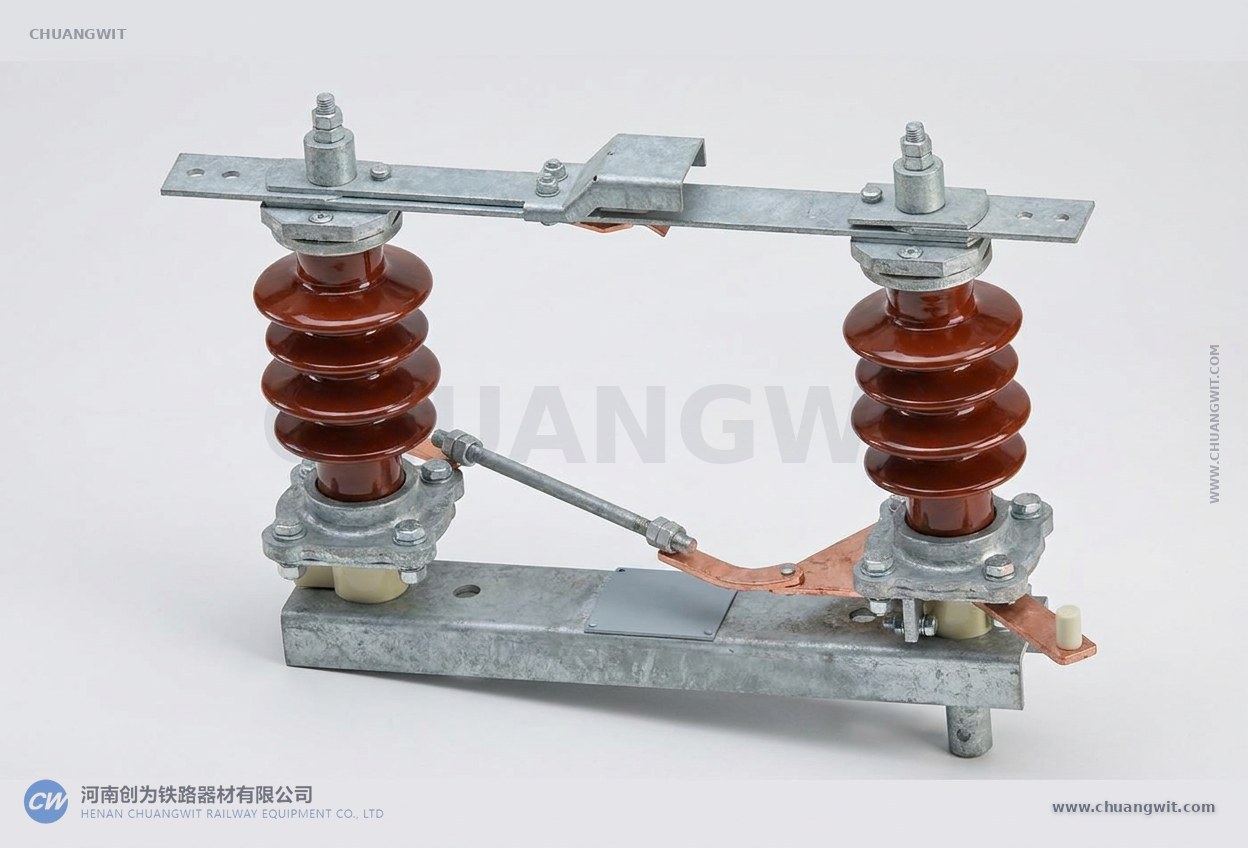
Not every location needs a specialist variant, and the honest baseline for ordinary duty is a sound standard switch. The GW4-10/15 standard disconnector is exactly that: a simple, proven design for 10 kV and 15 kV rail transit power supply points and distribution networks, whose low procurement and maintenance cost reflects decades of refinement rather than any concession in visible-break isolation duty.
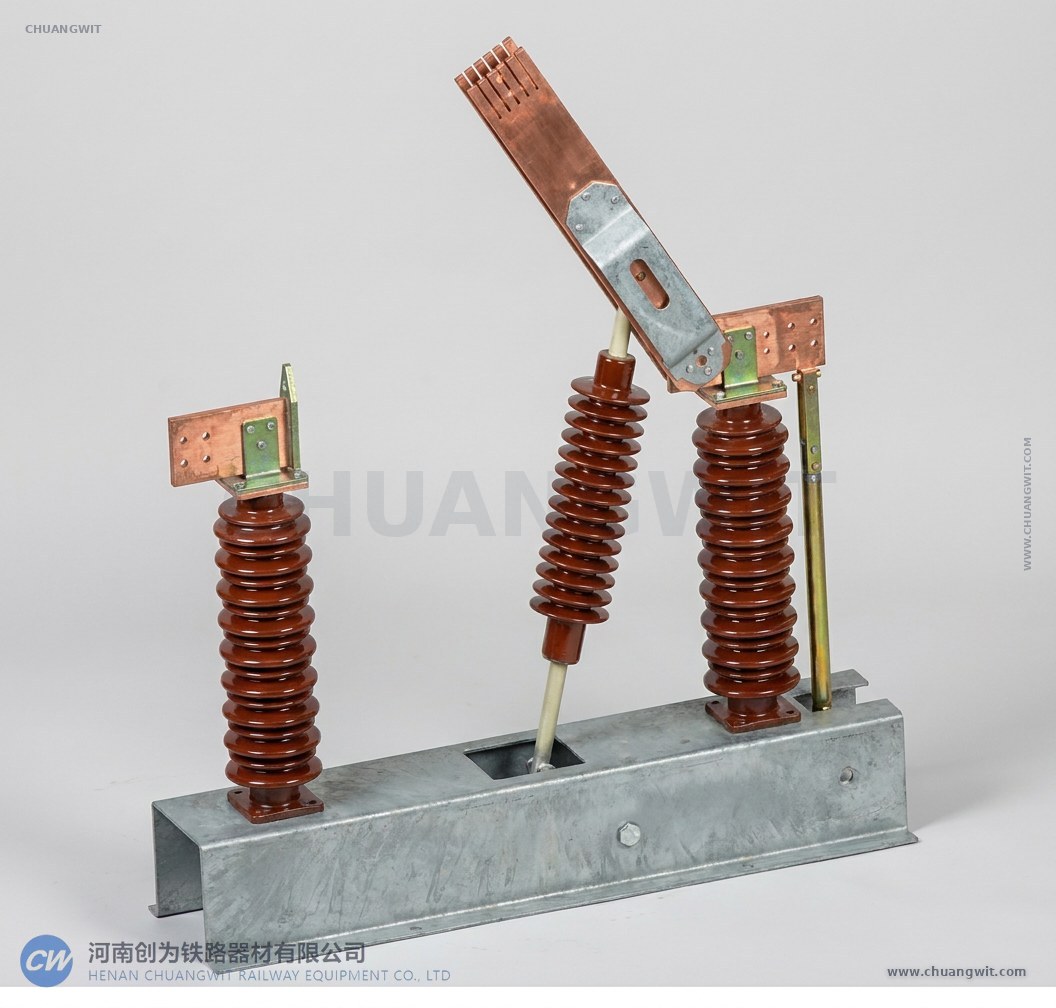
Winter-dominated locations shift the emphasis toward hardware that sheds what the weather deposits. Vertical-break construction, as in the GW1-27.5D vertical disconnector, moves the blade through a vertical arc in which gravity works with the switch rather than against it: meltwater, snow and debris fall away from the contact path instead of accumulating in a horizontal jaw. Hardware of this class is rated for operation from minus forty to plus seventy degrees Celsius and service at altitudes up to 4,000 m, and it pairs naturally with motorised drives when winter switching must not depend on a person at a crank.
A seasonal regime that prevents the failures
An effective annual cycle ties the countermeasures together. Before winter: exercise every switch through several full operations, verify drive torque and travel, apply the specified low-temperature lubricant, and confirm heaters and enclosure seals. Through winter: operate critical switches regularly so ice never gains a season to grow, and inspect after each major icing event. In spring: remove nests before they are finished, check for rodent damage in drive housings, and clean and regrease contacts after the worst of the pollution season. Through summer: trend loop resistance at every visit, so the slow corrosion failures announce themselves as data.
None of this is sophisticated, which is the point. Icing, corrosion and wildlife all exploit neglect rather than weakness, and a switch chosen for its environment, operated regularly and greased on schedule will outlast several generations of the problems this article describes. For help selecting switch variants for harsh or bird-active locations, our engineering team advises on anti-bird designs, winter options and maintenance intervals to match site conditions.