Vacuum interrupter maintenance occupies an unusual position in the maintenance catalogue. The interrupter itself is sealed, needs no gas, no oil and no contact dressing, and its vendors describe it, with justice, as maintenance-free. Yet every vacuum circuit breaker in a fleet also contains a mechanism that wears, contacts that erode a few micrometres at every operation, and a sealed vessel whose integrity the owner must nevertheless be able to attest. Maintenance-free, in other words, does not mean maintenance-ignoring; it means the maintenance moves from the interrupter to everything around it, and from routine attention to condition assessment.
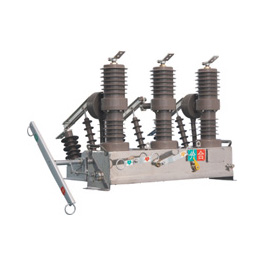
This article sets out how that assessment is done in practice: how contact wear is tracked from stroke measurements, how vacuum integrity is judged, what mechanism care a spring or permanent-magnet drive requires, how timing trends are read, and how the overhaul-versus-replace decision is made when the counters run down. It is written around the outdoor vacuum breakers common in traction substations and 12 kV distribution duty, the class represented by pole-mounted breakers such as the ZW10-12 outdoor vacuum circuit breaker, a 12 kV, 630 A breaker with a 10,000 operation mechanical life rating.
How contact wear develops and how to track it
Every interruption erodes the contacts slightly. Arc energy vaporises contact material at the arc roots; most of it recondenses, but a fraction is lost permanently, and the lost micrometres accumulate across thousands of operations. The consequences arrive quietly: as the contacts shorten, the meeting point of the mechanism travel shifts, the contact pressure at full closure falls, and in the limit the breaker can no longer guarantee proper touch at all.
Tracking is therefore geometric rather than destructive. The measurable is the stroke relationship: with the breaker closed, the residual travel or contact wipe available to the mechanism is measured and compared against the value recorded at commissioning. A falling wipe on a vacuum breaker indicates erosion in progress, exactly as a falling compression indicates wear on a mechanical joint. Each interrupter design allows a finite erosion allowance, stated by its manufacturer, and the maintenance task is to project the measured wear against the allowance at the actual switching rate. A breaker operating once a month and one operating daily consume their life at very different speeds, so the same hardware can sit comfortably within limits on one feeder and approach them on another.
Assessing vacuum integrity
The interrupter works because the interior is evacuated; lose the vacuum and the interrupter becomes a ceramic tube with air in it, incapable of reliable interruption. Gross vacuum loss usually announces itself, because the internal arc cannot be contained and the breaker fails to clear a test or an operation in a visible way. Slow leaks are the more insidious problem, degrading dielectric strength gradually over years while the breaker sits between faults.
Assessment is indirect, because a sealed vessel cannot be opened for inspection without destroying it. The standard diagnostic is a withstand test across the open pole: the breaker is opened, and a power-frequency voltage is applied between the contacts, with successful withstand taken as evidence that the internal insulation is intact. Some interrupter designs add loss-of-vacuum indication that changes state if internal pressure rises, and where this is fitted it should be checked at every maintenance visit. Factory documentation remains the reference: the type test certificate defines the withstand levels and the conditions under which they mean what they appear to mean, and any doubt about integrity is resolved by replacement rather than by argument, because the cost of a wrong answer is a breaker that fails to clear a fault.
Mechanism care: lubrication, fasteners and drives
The mechanism is where vacuum breaker maintenance actually spends its hours. Spring mechanisms accumulate energy in charged springs and release it through a latch train; permanent-magnet mechanisms hold the moving contact against magnetic force with few wearing parts. Both depend on clean, correctly specified lubricant at their pivots and latches, on fasteners torqued to specification, and on drive linkages that stay in adjustment. Lubricant ages by calendar as well as by operations, hardening in cold climates and washing away in wet ones, so the lubrication interval is set by environment and duty together.
The visit itself is unglamorous: inspect for leakage and corrosion, relubricate the specified points with the specified grades, verify latch behaviour through several slow and fast operations, and re-torque the structural fasteners. What the visit buys is the difference between a mechanism that fails in service and one that merely wears, and the record of each visit is the raw material for the timing trends described next.
Timing tests and how to read their trends
Timing tests measure when things happen inside the breaker: close time from coil energisation to contact touch, open time from trip coil to contact separation, and the travel behaviour in between. A single timing record confirms the breaker meets its stated performance. The sequence of records over years is where maintenance value lives, because each mechanism fault has a signature in the trends. Gradual lengthening of operation times points to lubrication degradation or spring fatigue; a step change between two visits points to a discrete event, a bent link, a worn latch, an obstruction; scatter between operations of the same visit points to intermittent behaviour that will soon become a failure.
Reading trends demands discipline about conditions. Times measured cold in January and warm in July are not directly comparable, and the maintenance record should note temperature, method and breaker state with each measurement. Intelligent breakers ease this burden considerably: a breaker that records its own operations, currents and event data turns trend analysis from an annual expedition into a database query.
Overhaul or replace?
The mechanical life rating frames the decision. A breaker rated for 10,000 mechanical operations, the class of the ZW32-12 pole-mounted outdoor vacuum circuit breaker, will reach that count after years or decades depending on switching frequency, and the approach of the count is the natural moment to weigh three options: overhaul the mechanism, replace the breaker, or accept continued operation under closer surveillance. Interrupter condition enters the same weighing. If wear measurements show ample contact life remaining, a mechanism overhaul restores most of the original capability at a fraction of replacement cost; if both interrupter and mechanism are consumed together, replacement wins.
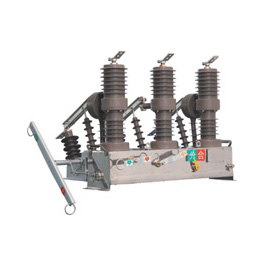
Intelligence tilts the economics further. The ZW20A-12 intelligent outdoor vacuum circuit breaker, rated 12 kV at 630 A or 1250 A with short-circuit breaking of 20 kA or 25 kA, carries controllers supporting telecontrol, protection integration and fault recording, so operation counts and event histories accumulate without site visits, and the overhaul decision rests on data rather than on the calendar.
Putting the schedule together
A workable circuit breaker maintenance schedule combines fixed and condition-based elements. Fixed, because lubricant ages and seals weather whether or not the breaker operates: an annual visual and lubrication visit suits outdoor fleets in most climates. Condition-based, because wear is proportional to operations: stroke, timing and integrity testing are triggered by operation counts and by protection events rather than by the calendar alone. Each result is recorded against the commissioning baseline, because the first measurement tells you what the breaker is, and only the sequence of measurements tells you what it is becoming.
Applied consistently, this programme keeps a vacuum breaker fleet in the state its technology promises: interrupters left sealed until their measured life is spent, mechanisms overhauled on evidence rather than habit, and no breaker trusted further than its data. For guidance on measurement procedures, life assessment or building a schedule for a specific fleet, our engineering team supports maintenance departments with the underlying documentation and application experience.