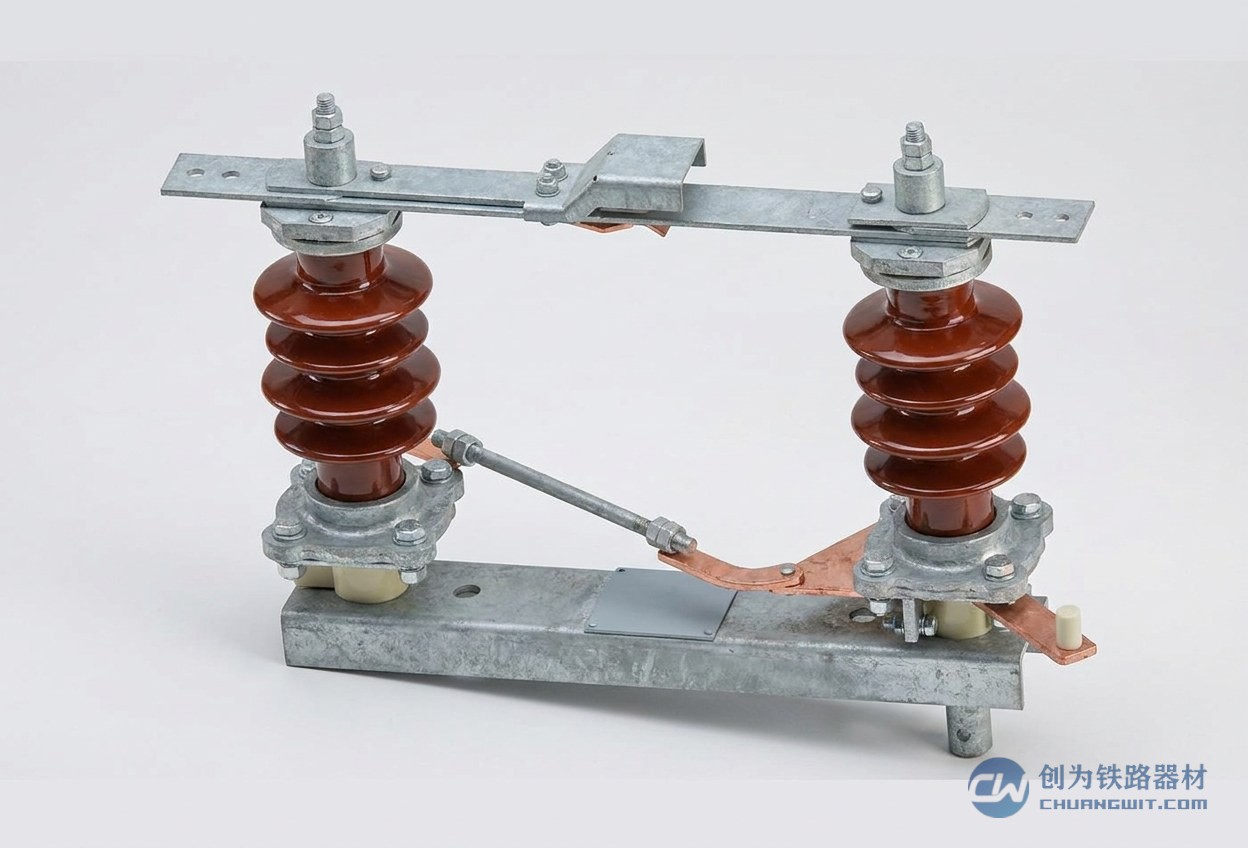
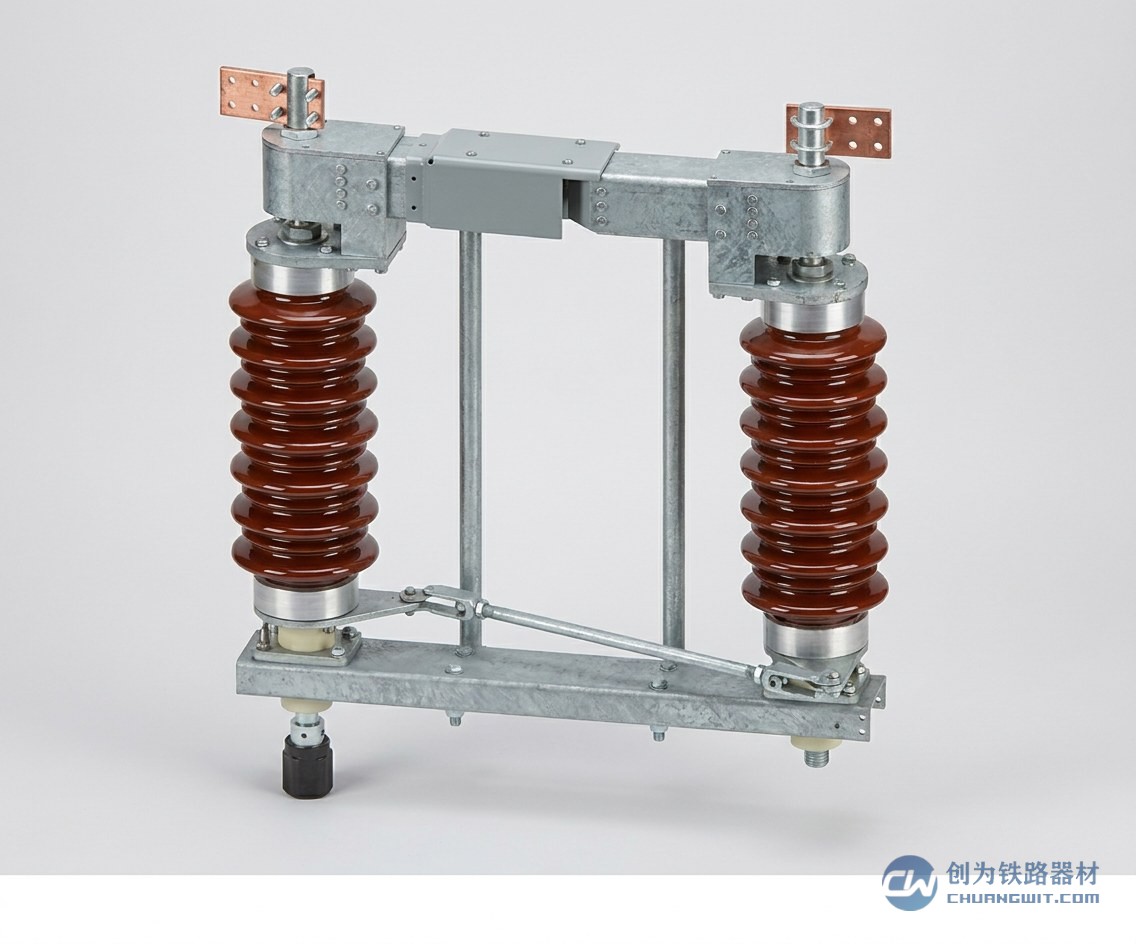
In railway overhead contact systems and in power supply systems for urban rail transit, the disconnector is a relatively simple piece of switchgear that is nonetheless absolutely indispensable. Many readers coming to traction power supply design and O&M for the first time ask similar questions: what exactly is the main function of a disconnector, what does a disconnector do, how does it differ from a circuit breaker and from a miniature circuit breaker (MCB), and why must a disconnector be installed in addition to the circuit breaker that is already there to interrupt short-circuit current? This article addresses the function and operating characteristics of disconnectors, together with these frequently asked questions about the difference between a disconnector and a circuit breaker and between a disconnector and an MCB, and sets out a systematic overview drawing on the product experience of Henan Chuangwit Railway Equipment Co., Ltd. in railway 27.5kV traction supply and in urban rail DC supply.
The Main Function of a Disconnector: Creating a Visible Break
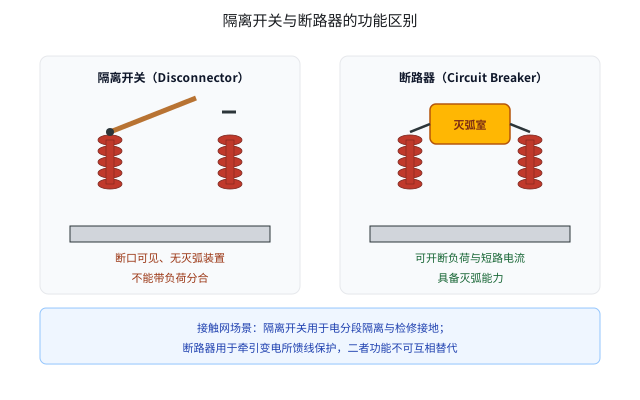
The main function of a disconnector can be summed up in one sentence: with no current or only a small current flowing, it establishes an obvious, visible and reliable electrical break in the circuit, completely separating the equipment or line to be maintained from the live parts. In more detail this covers four aspects.
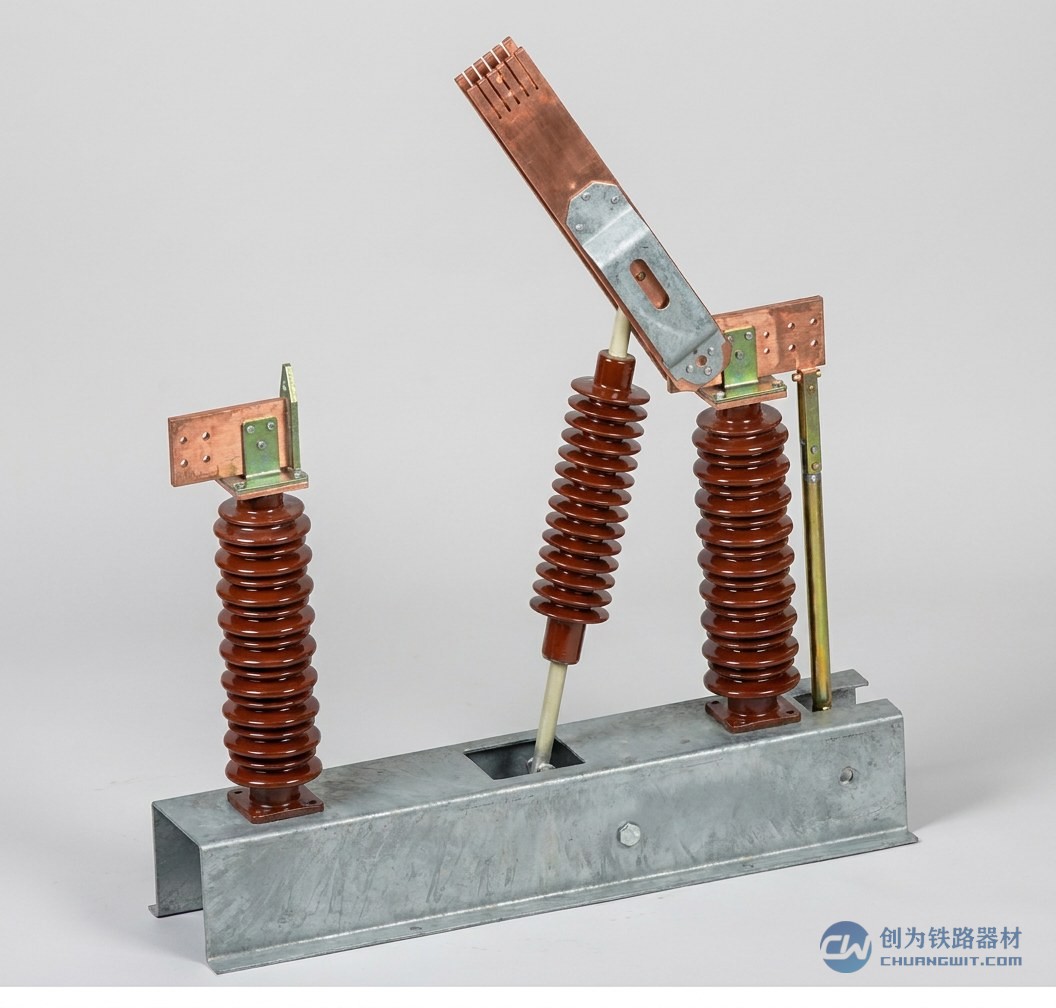
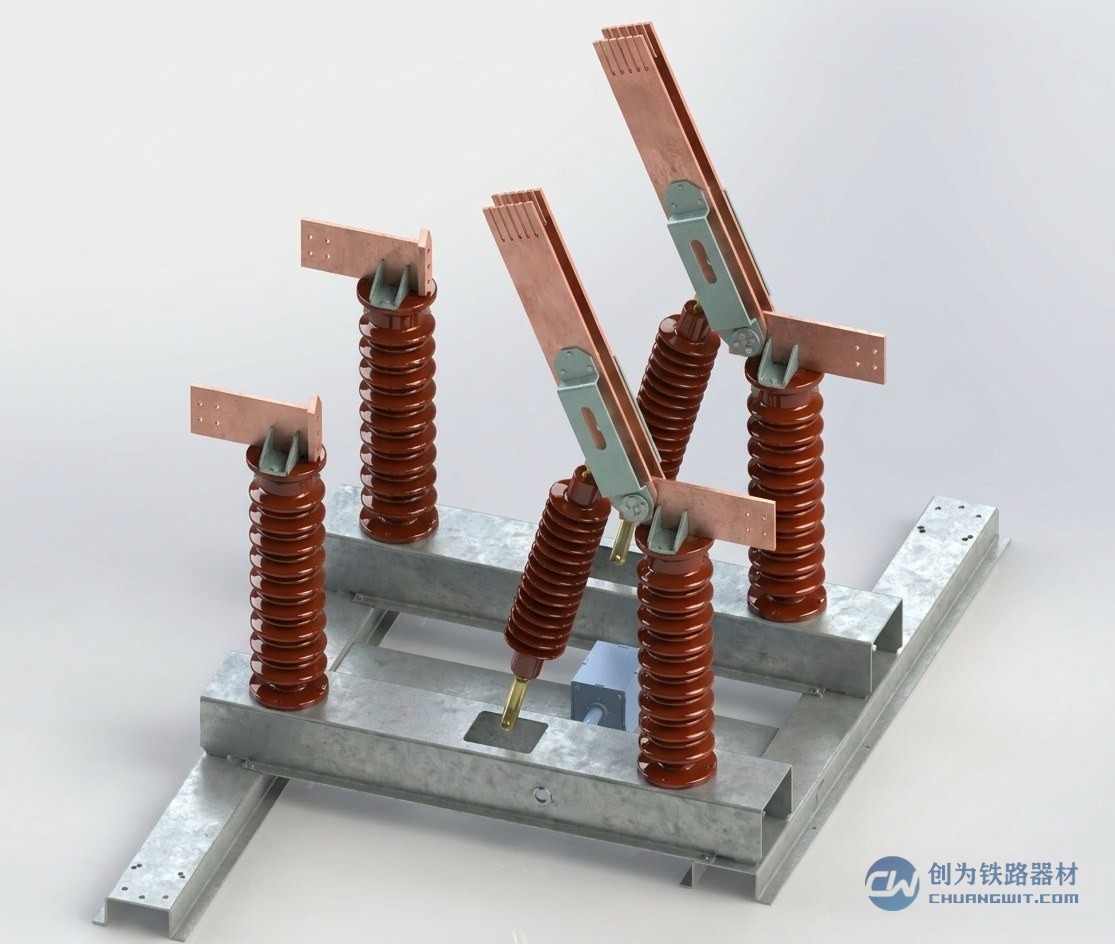
- Creating a visible break: once the disconnector is opened, the clearance between the moving and fixed contacts is clearly visible, and the insulation distance across the gap is designed for the rated voltage so that it reliably withstands both the operating voltage and overvoltages. Operating staff can confirm directly that the circuit has been broken, which is the tangible reassurance that a circuit breaker cannot provide.
- Isolating the supply: it electrically isolates equipment such as busbars, feeders, transformers and instrument transformers, creating the conditions for the subsequent safety measures of voltage testing and application of earths, and forms the first barrier in de-energised maintenance work.
- Supporting maintenance earthing: a disconnector fitted with an earthing switch can earth the line side at the same time as it opens, preventing injury to workers from accidental energisation and from induced voltage, which is particularly important in possession-based OCS maintenance.
- Switching operations: when the operating configuration is changed, the disconnector is used to bring supply sections into or out of service and to change the connection state of circuits, making it the basic item of equipment for switching operations in substations and on the overhead contact system.
Operating Characteristics: Normally Not Used to Make or Break Load
The key to understanding the difference between a disconnector and a circuit breaker lies in arc-quenching capability. A disconnector has no dedicated arc-quenching device, or at most a very weak capability, so it generally cannot be used to make or break load current and must never be used to interrupt short-circuit current.
Under the operating principle generally accepted in the industry, when de-energising a circuit the circuit breaker must be opened first and the disconnector opened afterwards, while when energising the disconnector must be closed first and the circuit breaker closed afterwards. If the disconnector is forced open or closed while the circuit breaker is still closed, an arc will be drawn between the contacts that cannot extinguish itself, and this may cause a flashover short circuit, destroy equipment or even injure personnel. For this reason interlocks are normally provided between disconnectors and circuit breakers so that maloperation is prevented by design. It should be noted that, within the limits permitted by the regulations, a disconnector may be used to make and break small-current circuits such as voltage transformers and surge arresters, subject to the product documentation and the on-site operating regulations.
Disconnector versus Circuit Breaker: One Isolates, the Other Interrupts
Disconnectors and circuit breakers are often installed in the same circuit, but their functional roles are entirely different. They can be compared across four dimensions.
- Different core function: a circuit breaker can make and break load current under normal conditions and interrupt short-circuit current under fault conditions, making it the protection and control core of the circuit; a disconnector is opened and closed only with no current or with very small current, and its task is isolation rather than interruption.
- Clearly different construction: a circuit breaker has a complete arc-quenching system with the contacts enclosed inside the arc-quenching structure, so the gap is generally not visible; a disconnector has no arc-quenching device or only a very weak capability, and the gap is exposed and clearly visible once it is opened.
- Different operating requirements: a circuit breaker can withstand load switching and fault interruption and is driven by the protection and control system; a disconnector may only be operated once the circuit breaker has been confirmed open, and interlocks enforce the sequence.
- Complementary roles: the typical circuit arrangement has the circuit breaker interrupting current and the disconnector creating the break, the two complementing each other to form a complete circuit that can be maintained.
Disconnector versus MCB: Entirely Different Voltage Levels and Applications
A miniature circuit breaker, commonly called an MCB or air switch, is in essence a low-voltage circuit breaker. It is often confused with a disconnector, yet the two are practically never interchangeable.
- Different voltage level: an MCB is used in low-voltage distribution circuits such as 380V and 220V; a disconnector in the OCS field operates in high-voltage and DC traction systems, for example railway 27.5kV traction supply and urban rail DC1500V supply.
- Different breaking capability: an MCB can make and break under load and incorporates overload and short-circuit protection, tripping automatically on fault; a disconnector is generally not used to make or break load and performs no protective function at all.
- Different applications: an MCB is mostly found in building distribution boards and final circuits to equipment, whereas a disconnector is installed in substations, at OCS electrical sectioning points and at feeder connection points, serving maintenance isolation and switching operations.
In one sentence: an MCB is a low-voltage protective switch that trips automatically, while a disconnector is a high-voltage isolating device with a visible break, and neither can replace the other.
Railway OCS Applications: 27.5kV Traction Supply and Urban Rail DC1500V
In electrified railway traction supply systems, the traction substation transforms the voltage of the power system and feeds the 27.5kV traction network, and disconnectors are installed in large numbers on the outgoing side of traction substations, at OCS electrical sectioning points, in station throat areas and at trackside cabins. They are used to bring OCS supply sections into or out of service and to establish reliable isolation and earthing conditions during possession-based maintenance. The outdoor disconnector with an earthing switch is one of the key items of equipment protecting the safety of OCS maintenance staff.
In urban rail, DC disconnectors are likewise needed in the running line, depot and stabling yard circuits of DC1500V traction supply systems to provide isolation and switching. The current in a DC circuit does not pass through zero, so the breaking conditions differ from those in AC, and DC disconnectors therefore incorporate specific design features and parameter settings. For these two groups of applications Henan Chuangwit Railway Equipment Co., Ltd. offers a high-voltage disconnector series and a dedicated urban rail DC disconnector product line, together with a range of operating mechanisms for designers and operators to match to the circuit parameters.
Frequently Asked Questions
What does a disconnector do, and can it be used to interrupt load directly?
A disconnector creates a visible break, isolates the supply, supports maintenance earthing and enables switching operations. It generally has no arc-quenching capability and cannot interrupt load current directly; load and fault currents should be broken using switchgear such as a circuit breaker.
Why install a disconnector when a circuit breaker is already provided?
The circuit breaker is responsible for breaking load and fault current, but its gap is enclosed within the arc-quenching structure, so the isolated state cannot be confirmed visually. The disconnector provides a clearly visible break and supports earthing during maintenance. The two functions are complementary and both are indispensable.
Is a disconnector the same thing as an MCB?
No. An MCB is the common name for a low-voltage circuit breaker, which provides overload and short-circuit protection and can trip under load. A disconnector is mostly used in high-voltage and traction DC systems and is responsible only for isolating the supply. Their voltage levels, constructions and functional roles all differ.
Why is the earthing function of a disconnector so important in OCS maintenance?
OCS maintenance is mostly carried out within possessions, and the work section must be reliably earthed. A disconnector with an earthing switch earths the line side as it opens and, together with procedures such as voltage testing and the application of portable earths, effectively prevents accidental energisation and injury from induced voltage.
Overall, the main function of a disconnector is isolation, the function of a circuit breaker is interruption, and an MCB is a protective switch on the low-voltage side; the three have different functional roles and must not be used interchangeably. If you are selecting equipment for a railway 27.5kV traction supply project, please see the high-voltage disconnector series; for DC1500V urban rail supply applications, please refer to the urban rail DC disconnector product page. You are also welcome to contact Henan Chuangwit Railway Equipment Co., Ltd. directly for selection advice tailored to your project.