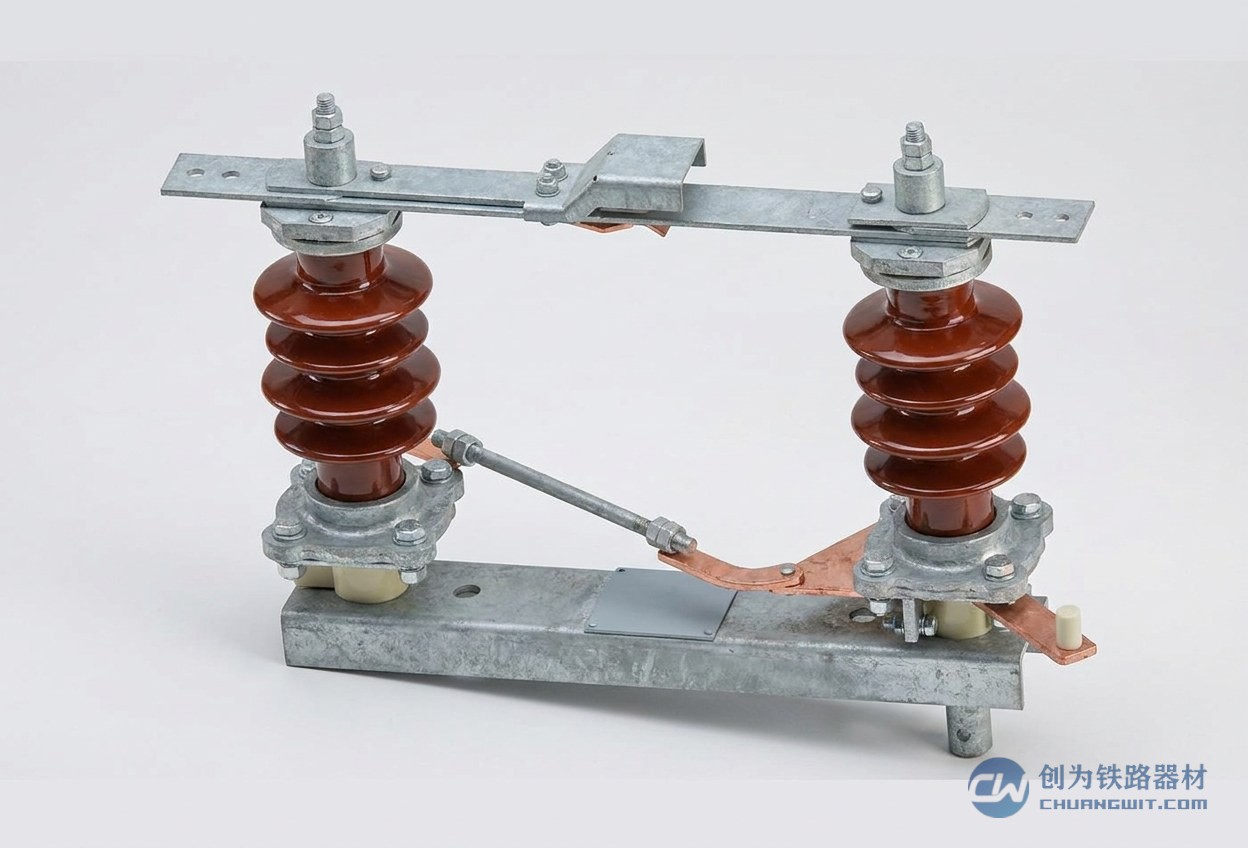
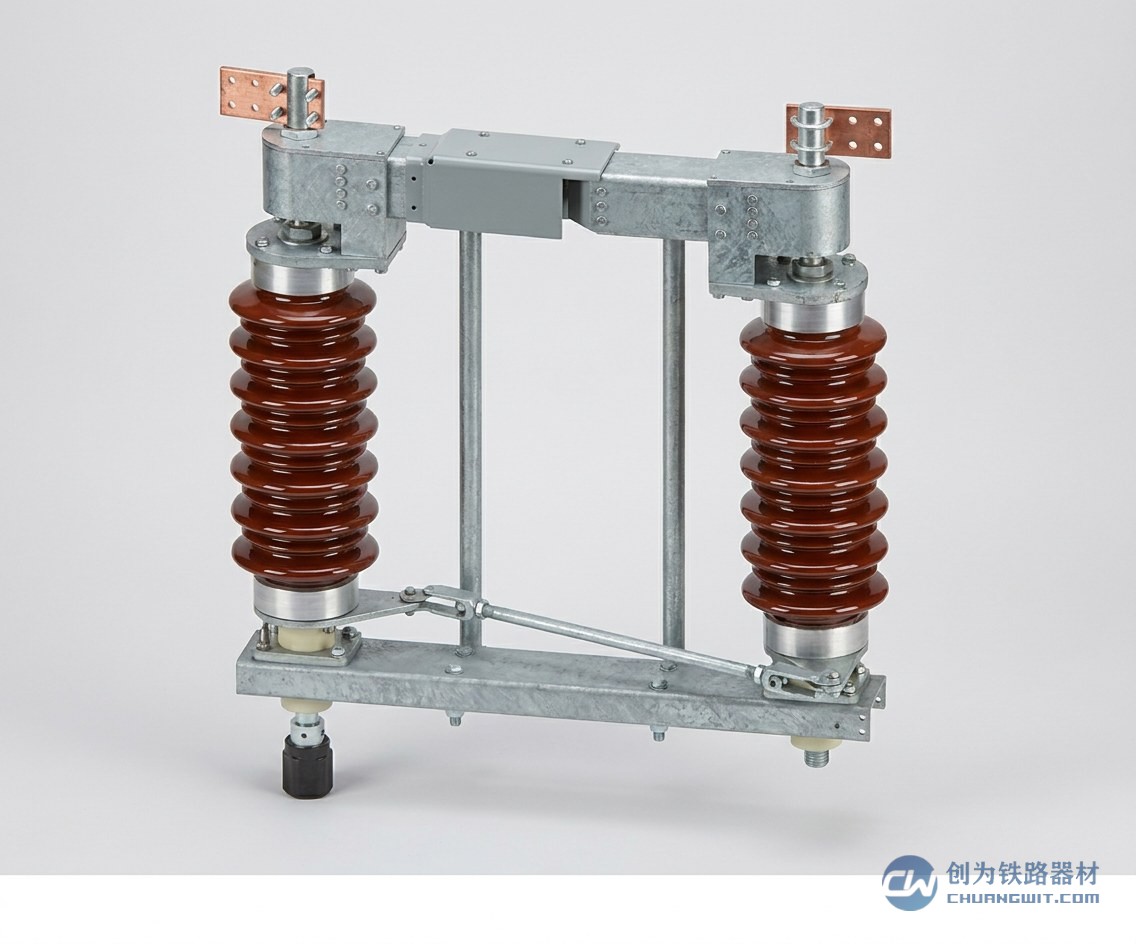
In OCS engineering design and spare parts procurement, disconnector models and pictures are among the most frequently searched items. A disconnector model designation looks like a string of letters and figures, but in fact every field has a definite meaning; and on electrical drawings the graphical symbol for a disconnector is very similar to that of a circuit breaker, which easily confuses newcomers. Based on the actual product line of Henan Chuangwit Railway Equipment Co., Ltd., this article arranges the disconnector model range by four application scenarios - railway 27.5kV traction supply, urban rail DC1500V, 10/15kV distribution and test tracks - and explains how operating mechanisms are matched and how disconnector graphical symbols should be read, for the reference of OCS designers, installers and O&M personnel.
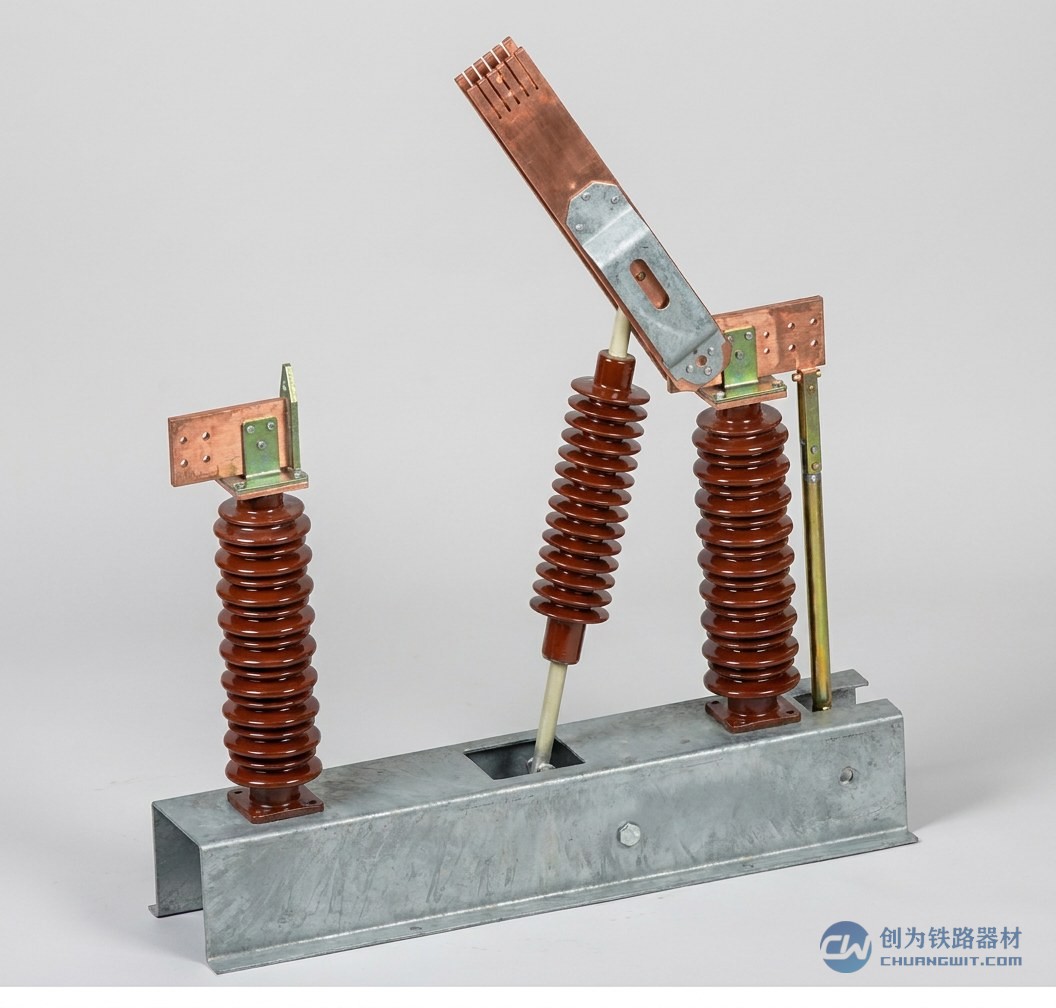
Reading a Disconnector Model: What Each Field Means
Following the model designation conventions generally used in the industry, an outdoor high-voltage disconnector model is usually made up of a product code, a design sequence number, the rated voltage and the rated current. Taking GW4-27.5/1250 as an example: G stands for disconnector, W for outdoor installation, 4 is the design sequence number, 27.5 indicates a rated voltage of 27.5kV, and the 1250 after the oblique stroke indicates a rated current of 1250A. Letters at the end of the designation mark structural differences, for example D identifies a product with an earthing switch and B a bird-proof version, while DC products carry a Z before the code, as in the DC disconnectors used on urban rail. Once this naming convention is understood, any disconnector model can be read at a glance for its installation situation, voltage level, current rating and structural features, and it also becomes easier to judge whether different models can replace one another.
Models for Railway 27.5kV Traction Supply
The 27.5kv disconnector is the most widely used product of its kind in the traction substations and overhead contact systems of China's electrified railways, being mainly responsible for supply section isolation, earthing during possession-based maintenance and switching operations. Henan Chuangwit Railway Equipment Co., Ltd. offers the following models for this application.
| Model | Product type | Typical use |
|---|---|---|
| GW4-27.5/1250 | Outdoor high-voltage disconnector | General isolation circuits in traction substations and at OCS electrical sectioning points |
| GW4-27.5/1250D | Type with earthing switch | Feeder and connection point circuits where earthing for maintenance is required |
| GW1-27.5 | Double-pole disconnector | Applications requiring two-pole OCS circuits to be operated together |
| GW1-27.5D | Vertical disconnector (with earthing) | Locations with restricted installation space that also require earthing isolation |
The GW4 series is a form of outdoor disconnector that has been widely used for many years in China's power and railway industries, and its body can be combined with different operating mechanisms to suit project requirements. The two-pole construction and vertical arrangement of the GW1 series offer a more flexible choice for particular installation conditions such as station yards. Models with the D suffix earth the line side as they open and are a common configuration for possession work on overhead contact systems.
Models for Urban Rail DC, 10/15kV Distribution and Test Tracks
DC1500V traction supply systems on urban rail transit make particular demands on disconnectors in terms of high capacity and DC suitability. Henan Chuangwit supplies two high-capacity DC disconnectors, ZGW1-1.5/3150 and ZGW1-1.5/6000, in which Z indicates direct current, 1.5 corresponds to a 1.5kV system voltage and 3150 and 6000 are the rated current classes, to be selected according to the capacity required by the feeder circuit. For 10/15kV distribution applications the company offers GW4-10/15 in the standard version and GW4-10/15-B in the bird-proof version, the latter being suitable for outdoor sections where birds are active and bird-related short circuits are likely. In addition, for locations such as urban rail depot test tracks where both DC and AC systems are involved, the company offers GW4-27.5/6000-JZ, a combined AC/DC disconnector.
| Application | Model | Description |
|---|---|---|
| Urban rail DC1500V | ZGW1-1.5/3150 | High-capacity DC disconnector |
| Urban rail DC1500V | ZGW1-1.5/6000 | High-capacity DC disconnector |
| 10/15kV distribution | GW4-10/15 | Standard outdoor disconnector |
| 10/15kV distribution | GW4-10/15-B | Bird-proof outdoor disconnector |
| Test track | GW4-27.5/6000-JZ | Combined AC/DC (1.5/27.5kV, 6000A) |
Test tracks are used for dynamic commissioning before vehicles enter service, and a test track may carry test circuits at both DC1500V and 27.5kV. Choosing a combined AC/DC model covers both requirements with a single item of equipment and simplifies spare parts management. Actual selection should nevertheless be governed by the circuit voltage, the current parameters and the operating conditions.
Matching Operating Mechanisms: Hand-Crank, Manual and Motorised
The disconnector body needs an operating mechanism to open and close, and the choice of mechanism has a direct effect on how the equipment is operated and maintained. Henan Chuangwit can supply three types: the CS-2 hand-crank mechanism, the CS-11 manual mechanism and the CJ-2 motorised mechanism.
- CS-2 hand-crank mechanism: operated by means of a hand crank, so that the pace of operation is controllable; suitable for circuits operated locally and infrequently.
- CS-11 manual mechanism: opens and closes directly by hand, with a simple construction that is easy to maintain, making it the traditional and widely used configuration.
- CJ-2 motorised mechanism: supports motorised opening and closing, facilitating remote control and centralised monitoring, and is suited to motorised OCS disconnectors in substations moving towards unattended operation.
The matching of a particular body model with an operating mechanism should be determined in the light of the installation position, the operating power supply conditions and the telecontrol requirements, and it is advisable to confirm each item with the manufacturer's technical staff before ordering.
The Difference Between Disconnector and Circuit Breaker Symbols
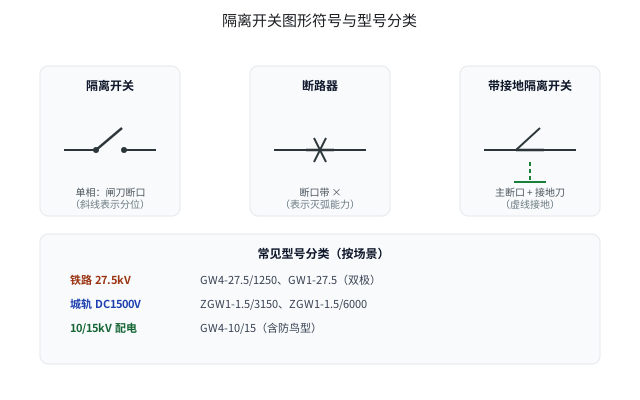
On main connection diagrams and schematic diagrams the graphical symbol for a disconnector closely resembles that for a circuit breaker. Three points are enough to tell them apart quickly.
- Disconnector symbol: made up of the circuit line together with a short oblique blade stroke, with one end of the blade hinged on the circuit and a clear gap between the other end and the fixed contact, which graphically conveys the idea of a visible break. A disconnector with an earthing switch also has an earthing mark led out on the gap side.
- Circuit breaker symbol: on a gap similar to that of the disconnector, a small cross (×) mark is superimposed at the gap, indicating that the device has arc-quenching and breaking capability and can interrupt load current and short-circuit current.
- A rule of thumb: a gap carrying a cross (×) mark is a circuit breaker, while an ordinary blade gap is a disconnector. The two often appear as a pair on main connection diagrams, the circuit breaker breaking the current first and the disconnector then establishing the isolating gap.
It should be noted that different drawing software and different editions of symbol collections may express details slightly differently, and the legend on the drawing itself should prevail when reading it.
Frequently Asked Questions
What is the difference between GW4-27.5/1250D and GW4-27.5/1250?
The two have the same rated voltage and rated current for the body; the difference is that the D suffix indicates an earthing switch, so that the line side can be earthed directly when the unit is opened, making it suitable for circuits that require earthing for maintenance. The model without D performs the isolation function only.
How should ZGW1-1.5/3150 and ZGW1-1.5/6000 be chosen between?
Both are high-capacity DC1500V disconnectors and differ in rated current class. Selection should be based on the continuous operating current of the circuit, the equipment layout and the operating conditions, and it is advisable to submit the circuit parameters to the manufacturer for verification before finalising the configuration.
What does a cross (×) mark on a disconnector symbol mean?
A gap carrying a cross (×) mark is the symbol for a circuit breaker, indicating arc-quenching and breaking capability, whereas the disconnector symbol is an ordinary blade gap without that mark. This is the most direct and most commonly used way of telling the two apart.
Why should a combined AC/DC disconnector be chosen for a test track?
A test track may carry commissioning supply circuits of both the DC1500V and the 27.5kV system, and GW4-27.5/6000-JZ, a combined AC/DC unit (1.5/27.5kV, 6000A), covers both requirements, reducing the variety of equipment and simplifying O&M management.
The foregoing is the disconnector model range and the key points on graphical symbols, arranged by application scenario. It should be noted that the model information here is based on the current product line of Henan Chuangwit Railway Equipment Co., Ltd., and that the technical agreement and the design drawings should prevail for actual orders. To see details and photographs of the AC products, please visit the high-voltage disconnector series; for urban rail DC products, please refer to the urban rail DC disconnector; and for the basic concepts of manual disconnector components, you may also consult the itswe OCS encyclopedia page on manual disconnector components.