18-3 Suspension Pulley (Types A / B)
Free-running pulley at head-span and anchor points that suspends and guides ropes with low wear.
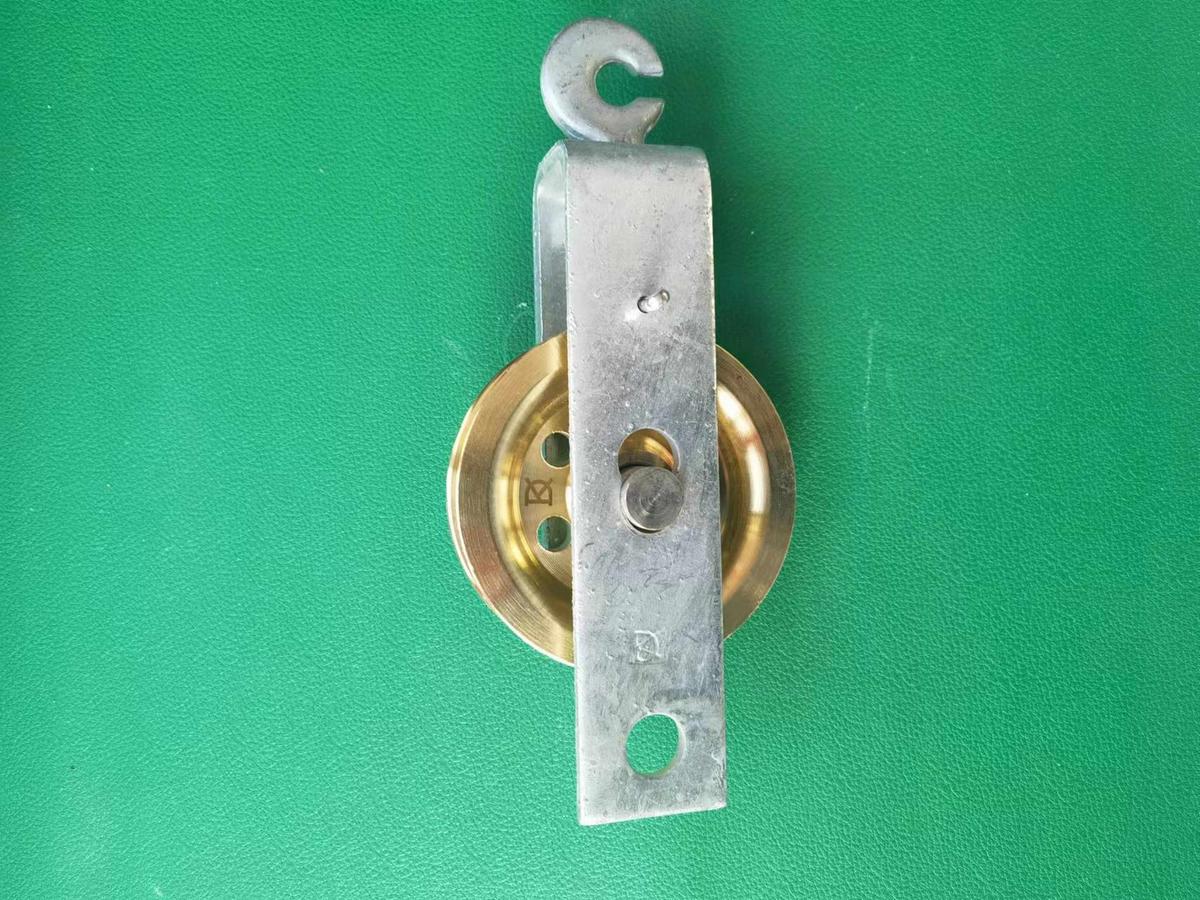
Specifications
| Model | 18-3 (A/B) |
|---|---|
| Drawing No. | 18-3 |
| Standard | TB/T 2075.18-2024 — Part 18: Head-span suspension devices |
| Installation | Hung at suspension or anchor points, carrying and guiding ropes over the wheel |
The 18-3 suspension pulley consists of a pulley body, bracket and connection hook. Installed at head-span suspension points or at anchor and compensation arrangements, it carries a rope over the wheel so the rope is suspended and guided with rolling instead of sliding contact — cutting sliding resistance and rope wear.
Types A and B adapt to different assembly directions. The wheel material and surface finish are matched to the rope hardness so the contact face stays smooth, and the hook interfaces are standard for the head-span fittings family.
Design Features
- Free-running wheel reduces rope sliding resistance and wear
- Types A / B cover different assembly directions
- Connection hook matches head-span fittings
- Wheel surface matched to rope hardness, smooth contact
The product is manufactured under CRCC railway product certification and an ISO 9001 quality management system, with incoming material inspection, in-process control on critical operations and batch-by-batch final inspection before delivery.
Henan Chuangwit Railway Equipment Co., Ltd. supplies this locator with selection calculations, matched fittings and site technical guidance for traction power projects. At head-span suspension points and at anchor compensation arrangements, wherever a rope must be suspended and change direction with low friction. Rolling contact cuts the rope's sliding resistance and wear — important where ropes move with temperature compensation. The assembly direction of the bracket and hook; choose per the geometry of your suspension point. TB/T 2075.18-2024 — Part 18: Head-span suspension devices.Frequently Asked Questions
Where is the suspension pulley used?
Why a pulley instead of a fixed hook?
What is the difference between types A and B?
Which standard applies?
Performance
Operating Conditions
Outdoor service at head-span suspension points and anchor compensation arrangements with moving ropes.
Mechanical Performance
Rolling contact reduces rope drag and wear; wheel and bearing run freely through repeated load cycles.
Applications
Station Head-Spans
Suspends ropes at span points.
Anchor Compensation
Guides compensation ropes at anchors.
Low-Wear Guidance
Rolling instead of sliding contact.
Standard Assemblies
Hook matches head-span fittings.