3-3 Equipotential Jumper
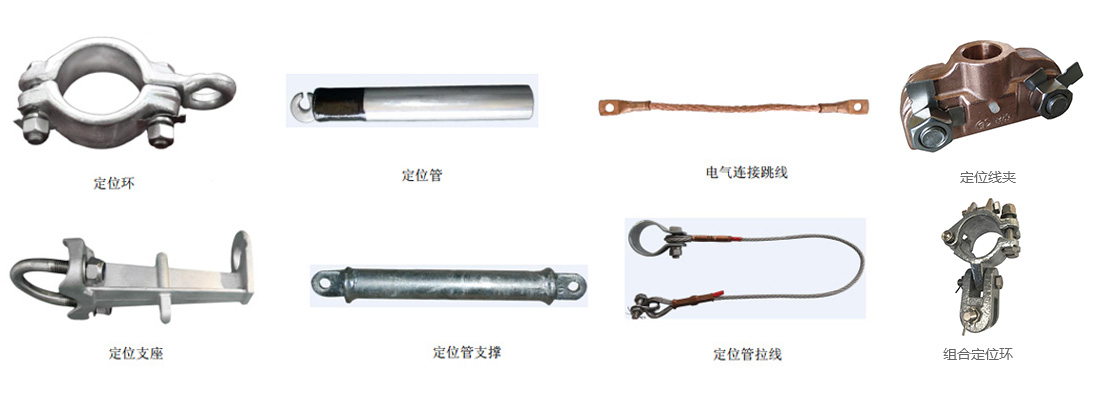
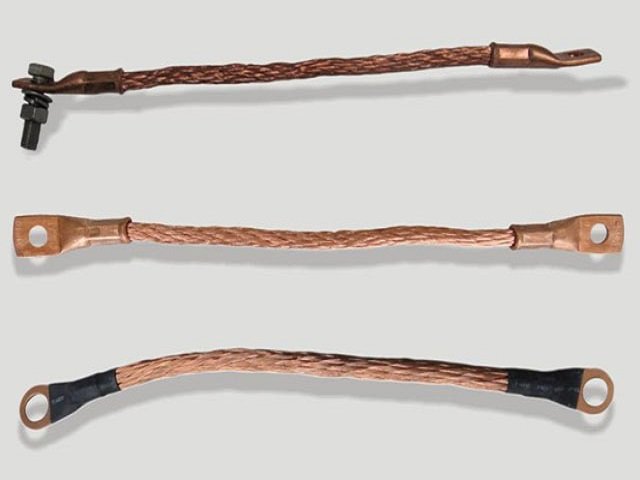
Stranded copper bonding jumper that equalizes potential across the joints of the positioning system.
Specifications
| Model | 3-3 |
|---|---|
| Drawing No. | 3-3 |
| Standard | TB/T 2075.3-2024 — Part 3: Limit-type positioning devices |
| Installation | Bonding locator, bracket, positioning tube and cantilever parts for equipotential transition |
The 3-3 equipotential jumper is the bonding member of the limit-type positioning device: a flexible stranded copper conductor with crimped terminals at both ends that joins locator, registration bracket, positioning tube and cantilever so the whole registration system stays electrically continuous.
Bonding across the moving joints keeps their potential difference near zero, preventing arcing burns at hinged nodes and the stray-current electrolytic corrosion that unmetered joints suffer. Lengths are matched to the assembly dimensions of the positioning system.
Design Features
- Multi-strand copper construction stays flexible across moving joints
- Crimped terminals give low contact resistance and stable connections
- Lengths matched to positioning system assembly dimensions
- Stable crimping process, connection reliable over service life
The product is manufactured under CRCC railway product certification and an ISO 9001 quality management system, with incoming material inspection, in-process control on critical operations and batch-by-batch final inspection before delivery.
Henan Chuangwit Railway Equipment Co., Ltd. supplies this locator with selection calculations, matched fittings and site technical guidance for traction power projects. The locator, bracket and tube joints are metal-to-metal contact across hinges — without bonding they sit at slightly different potentials, causing micro-arcing and electrolytic corrosion. The jumper equalizes them. Multi-strand copper rope with crimped terminals at both ends — flexible enough to cross moving joints, with low and stable contact resistance. Between the locator, registration bracket, positioning tube and cantilever wherever a joint would otherwise interrupt electrical continuity of the registration system. TB/T 2075.3-2024 — Part 3: Limit-type positioning devices, of the Fittings for overhead contact system of electrified railway series.Frequently Asked Questions
Why does a positioning system need equipotential bonding?
What is the jumper made of?
Where exactly is it fitted?
Which standard governs it?
Performance
Operating Conditions
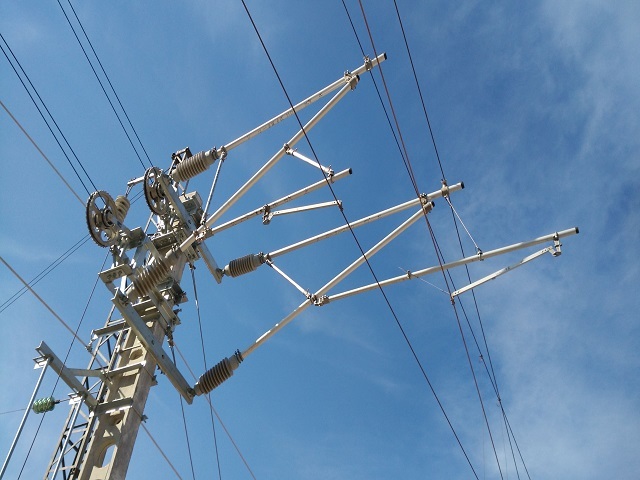
Outdoor service at OCS registration points on mainline, high-speed and station structures, subject to suspension, wind, ice and dynamic pantograph loads as defined by the OCS design.
Mechanical Performance
Flexible stranded construction follows joint movement without fatigue; crimped terminals hold contact resistance low over time.
Electrical Performance
Equalizes potential across positioning-system joints, preventing arcing at hinged nodes and electrolytic corrosion from potential differences.
Applications
Moving Joints
Flexible bonding across hinged nodes.
Corrosion-Prone Areas
Prevents electrolytic corrosion of joints.
Current Path
Keeps the registration system electrically continuous.
Standard Assemblies
Cut to match positioning system dimensions.