13-1H Ratchet Tensioner
Ratchet-type tension compensation device with counterweight and wire-break braking for OCS anchor sections.
Specifications
| Model | 13-1H |
|---|---|
| Standard | TB/T 2075.13-2024, Fittings for overhead contact system of electrification railway — Part 13: Ratchet compensation devices |
| Materials | Cast steel / cast iron counterweights, high-strength pulley set, stainless ratchet wheel |
| Installation | At anchor masts or anchor brackets, assembled with the counterweight stack, compensation rope and anchor base |
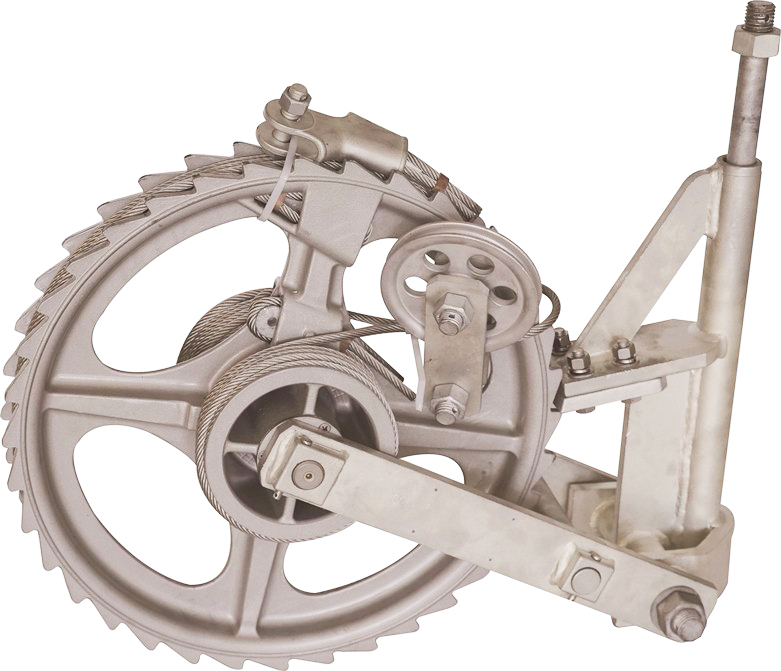
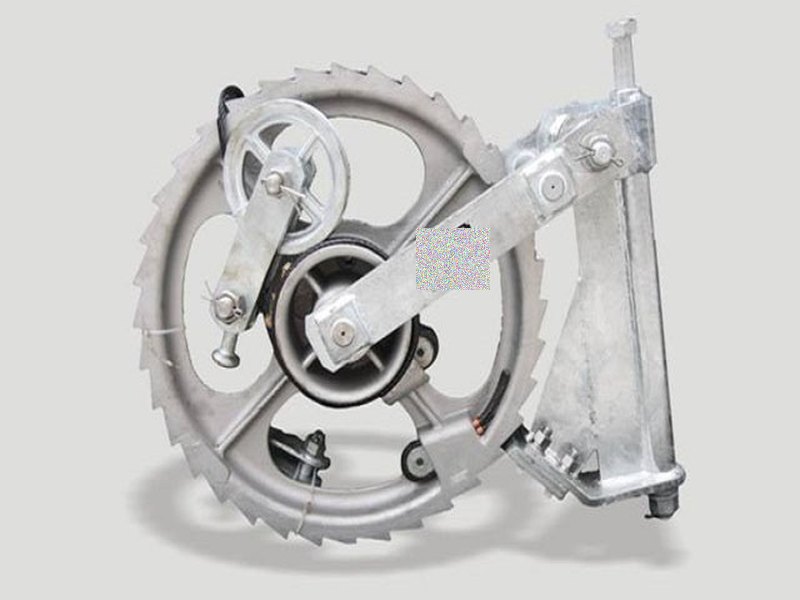
The 13-1H ratchet tensioner is a ratchet-type tension compensation device for anchor sections of electrified railway overhead contact systems. Its ratchet wheel, with rope grooves of different effective radii, works against a counterweight stack to keep contact wire and messenger wire tension constant through daily and seasonal temperature swings.
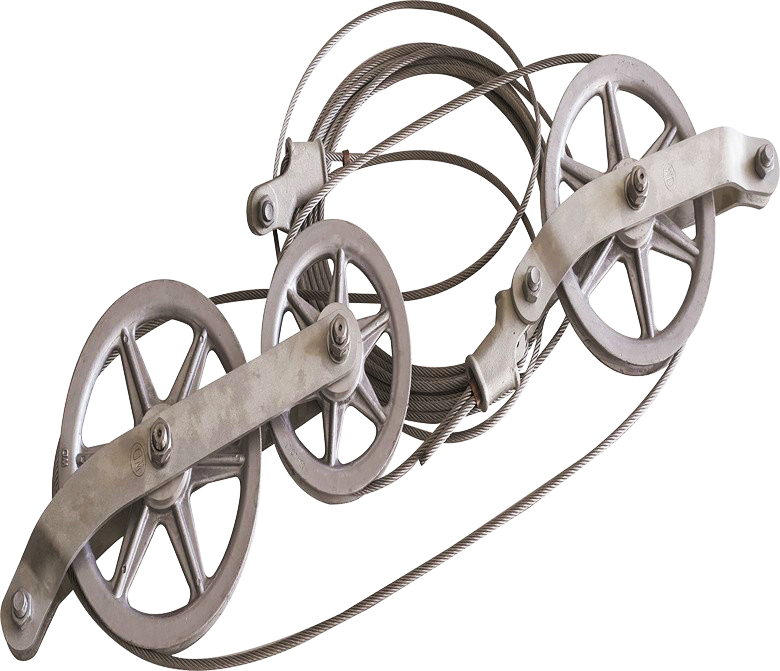
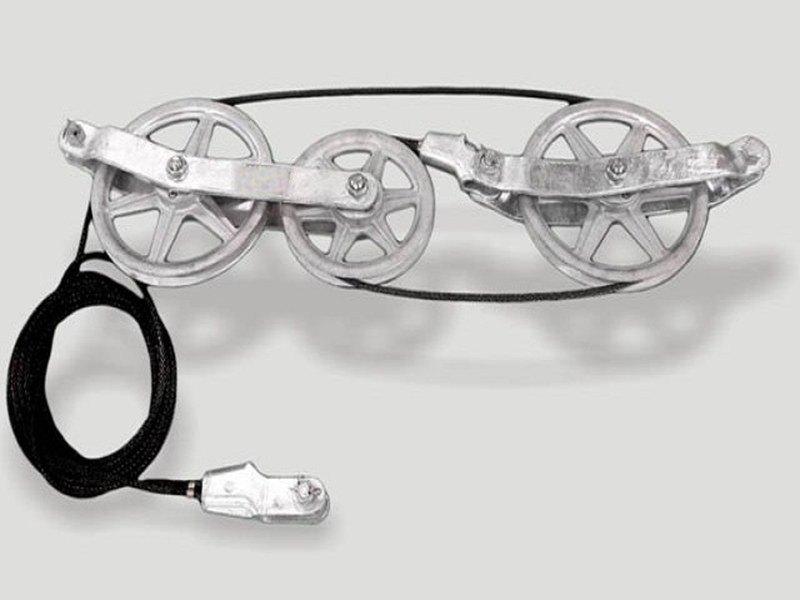
Manufactured to TB/T 2075.13-2024, Fittings for overhead contact system of electrification railway — Part 13: Ratchet compensation devices, the unit consists of a ratchet body, support bracket, compensation rope, equalizing wheel and connecting fittings. The ratchet ratio allows a comparatively small counterweight stack to maintain the nominal tension, and a braking mechanism engages on sudden rope slack to arrest the weight.
Transmission efficiency is high and braking is reliable; the ratchet wheel and rope grooves remain visible for inspection, giving long maintenance-free intervals. Bracket and base are supplied as a matching set so the tensioner bolts directly onto the anchor arrangement with minimal site adjustment.
Henan Chuangwit Railway Equipment Co., Ltd. supplies the 13-1H with type test documentation under its CRCC-certified production line, together with selection calculations and installation guidance for traction power projects.
Frequently Asked Questions
How does a ratchet tensioner keep OCS tension constant?
A ratchet wheel with rope grooves of different radii works against a counterweight stack: as temperature lengthens or shortens the wires, the weight rises or falls and the ratchet pays out or takes in compensation rope, holding contact wire and messenger wire tension essentially constant.
What happens if the contact wire breaks?
The braking mechanism engages when the rope loses tension suddenly, locking the ratchet wheel so the counterweight stack cannot fall to the ground and the accident is contained.
Which standard does the 13-1H follow?
TB/T 2075.13-2024, Fittings for overhead contact system of electrification railway — Part 13: Ratchet compensation devices.
Performance
Operating Conditions
Outdoor service at OCS anchor sections, carrying full tension-length loads through daily and seasonal temperature swings as defined by the OCS design.
Mechanical Performance
Ratchet wheel and counterweight stack hold wire tension constant over the temperature range; the braking mechanism arrests the weight on sudden rope slack, containing wire-break events.
Applications
Mainline Anchor Masts
Standard tensioning for mainline anchor sections.
Seasonal Swings
Constant tension from summer heat to winter cold.
Wire-Break Protection
Brake locks the weight if the rope slackens suddenly.
Open Anchor Sections
Needs space for counterweight travel.