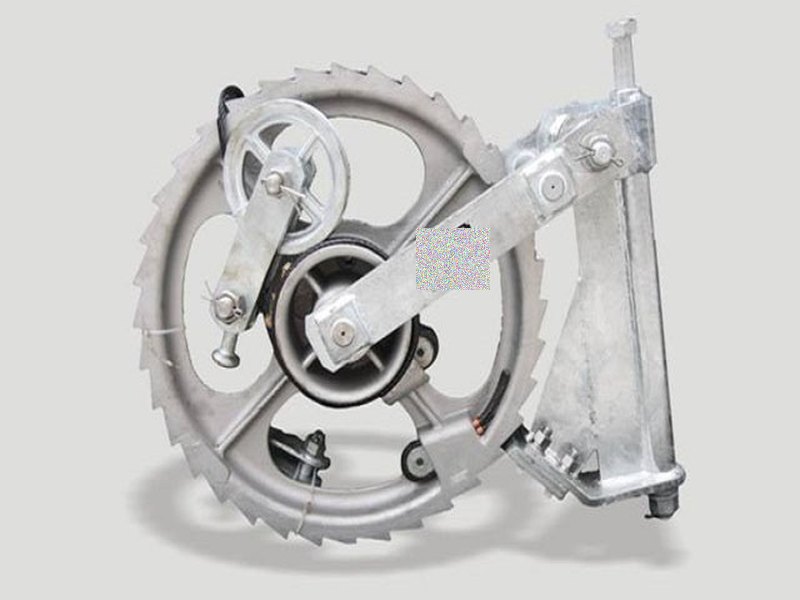
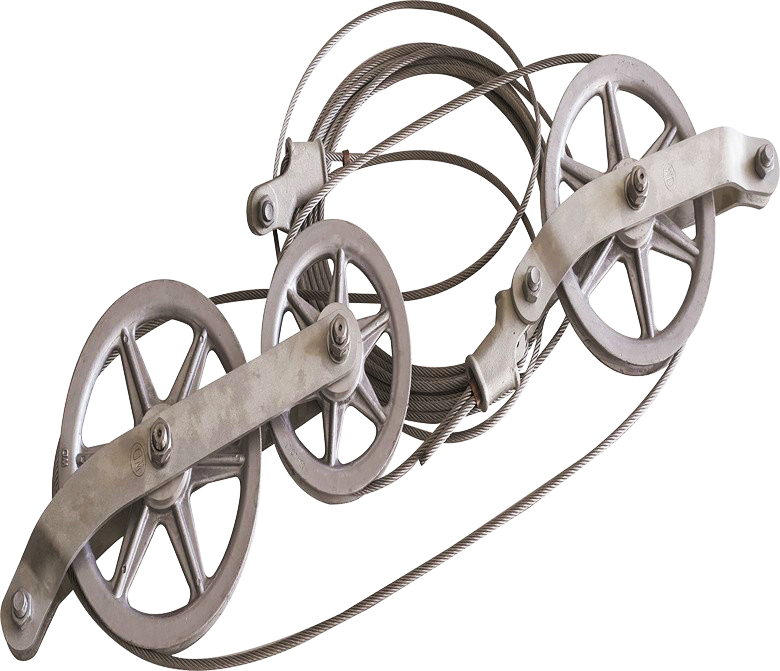
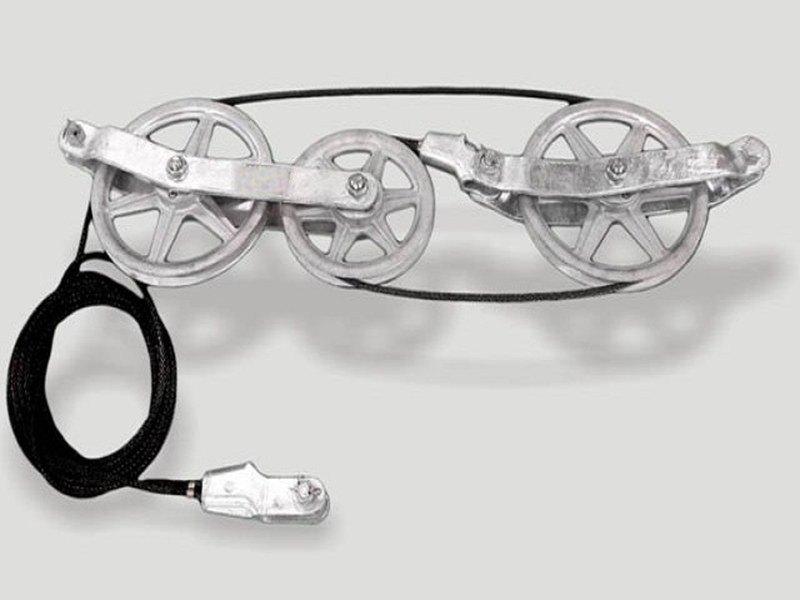
13-1G Ratchet Compensation Device
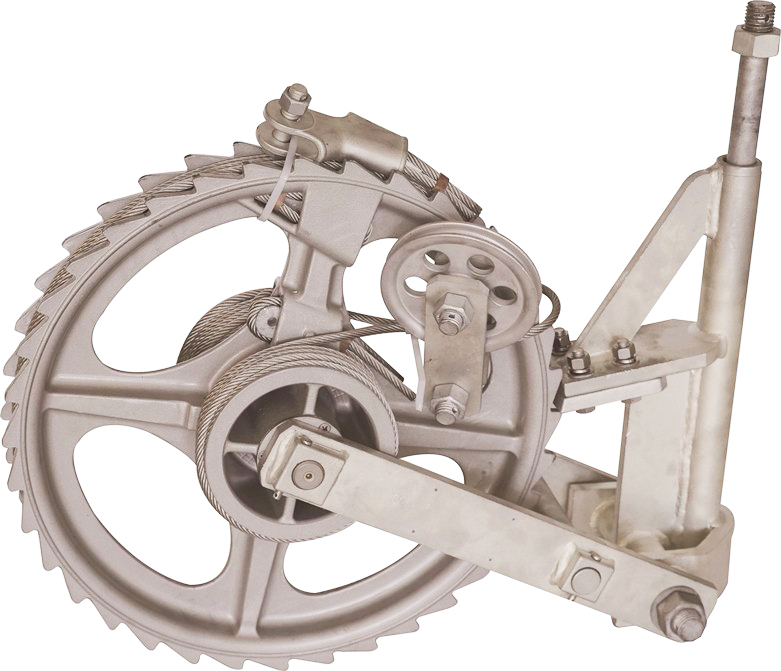
13-1G complete ratchet tension compensation assembly (ratchet, bracket, equalizing wheel, rope and clamps) with wire-break braking.
Specifications
| Model | 13-1G |
|---|---|
| Standard | TB/T 2075.13-2024, Fittings for overhead contact system of electrification railway — Part 13: Ratchet compensation devices |
| Materials | Cast steel / cast iron counterweights, high-strength pulley set, stainless ratchet wheel |
| Installation | At both ends of the tension length, with counterweight stack, compensation rope and anchor base |
The 13-1G ratchet compensation device is a complete automatic tensioning assembly for anchor sections of electrified railway overhead contact systems. It keeps contact wire and messenger wire tension constant as temperature changes the wire length, preserving sag and pantograph contact quality.
The assembly consists of a ratchet wheel, ratchet bracket, equalizing wheel, compensation rope and double-eye wedge-type clamps. Manufactured to TB/T 2075.13-2024, Fittings for overhead contact system of electrification railway — Part 13: Ratchet compensation devices, it achieves transmission efficiency of 97% or higher, and its braking action on sudden rope slack prevents the counterweight stack from falling in a wire-break incident.
The counterweight stack is sized from the tension length's design tension, and the compensation range is selected to cover the expected temperature swing of the section. Ratchet and rope condition stay visible for inspection, supporting long maintenance-free intervals.
Henan Chuangwit Railway Equipment Co., Ltd. supplies the device as a certified complete set — ratchet, bracket, rope and fittings matched at the factory — with selection calculations and site installation guidance included.
Frequently Asked Questions
What components make up a ratchet compensation device?
A ratchet wheel, ratchet bracket, equalizing wheel, compensation rope and double-eye wedge-type clamps, forming a complete anchor-section tensioning assembly.
What is the transmission efficiency?
Transmission efficiency is 97% or higher, with reliable wire-break braking to contain accidents.
How is the counterweight stack sized?
The counterweight weight is calculated from the tension length's nominal wire tension; the compensation range is matched to the expected temperature-driven elongation.
Performance
Operating Conditions
Outdoor service at OCS anchor sections, carrying full tension-length loads through daily and seasonal temperature swings as defined by the OCS design.
Mechanical Performance
Ratchet-type automatic tensioning with large compensating travel; transmission efficiency is high and the rope grooves remain visible for inspection.
Applications
Tension-Length Ends
Automatic tensioning at both anchor points.
Inspectable Design
Ratchet and grooves visible for checks.
Temperature Duty
Compensates wire length across seasons.
Mainline Sections
Proven on high-speed and conventional lines.