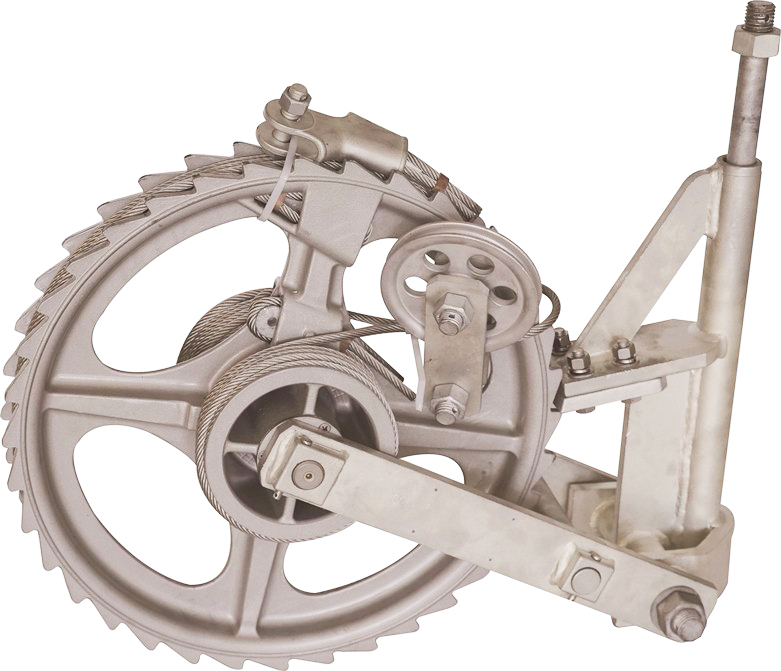
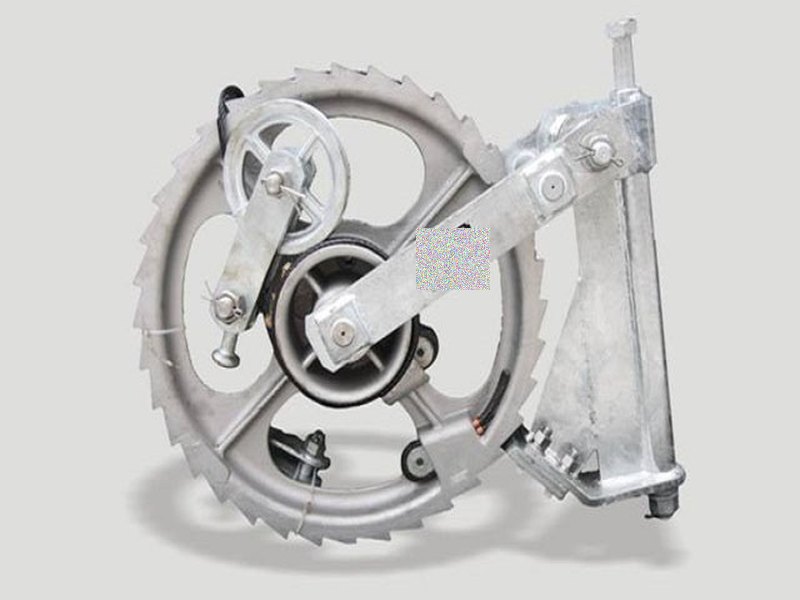
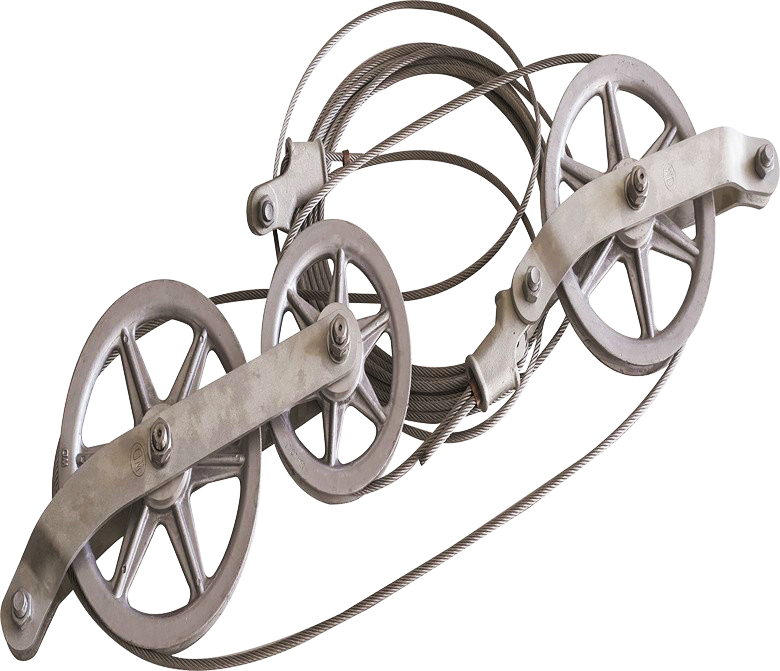
12-1H Compensation Pulley Block (1:2, 1:3, 1:4 Ratios)
Multi-ratio pulley block that changes compensation rope direction and multiplies travel in OCS tensioning systems.
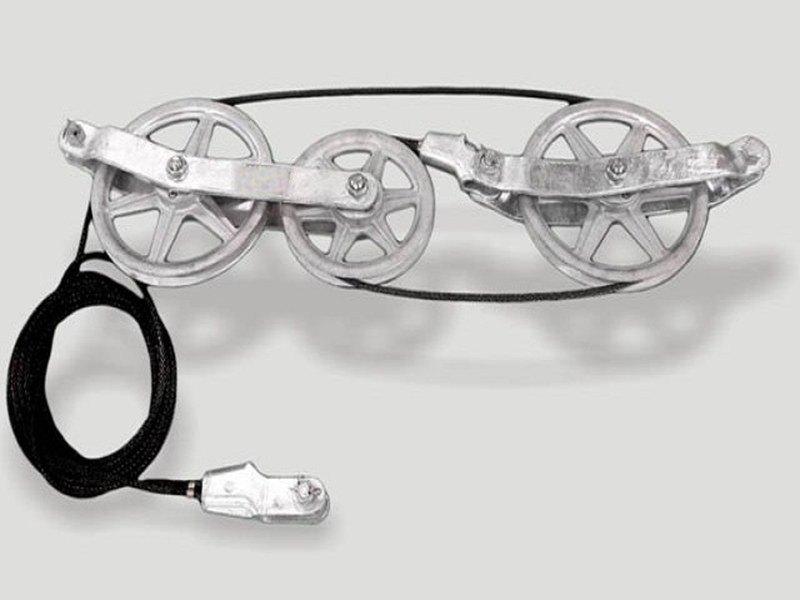
Specifications
| Model | 12-1H |
|---|---|
| Standard | TB/T 2075.12-2024, Fittings for overhead contact system of electrification railway — Part 12: Pulley compensation devices |
| Installation | At contact suspension anchor points, assembled with compensation rope, counterweight stack and anchor base |
The 12-1H compensation pulley block is used in the tensioning system of overhead contact system anchor sections to change the direction of the compensation rope and to multiply the effective compensating travel, allowing automatic tension compensation of the contact wire and messenger wire.
Manufactured to TB/T 2075.12-2024, Fittings for overhead contact system of electrification railway — Part 12: Pulley compensation devices, the block offers 1:2, 1:3 and 1:4 transmission ratios. The higher the ratio, the shorter the counterweight travel required — useful where installation space is limited — with high transmission efficiency and stable tension compensation.
The aluminum pulleys run on maintenance-free, solid-lubricated bearings, and the rope grooves match the compensation rope diameter to prevent uneven wear. The block combines with 12-2 D-type connectors, 12-3 double-eye rods and 12-4 tongue-eye rods as a complete TB/T 2075.12 tensioning set.
Henan Chuangwit Railway Equipment Co., Ltd. supplies the 12-1H under its CRCC-certified production line, with selection support for ratio and counterweight sizing on request.
Frequently Asked Questions
Which transmission ratios does the 12-1H offer?
Three ratios — 1:2, 1:3 and 1:4. The higher the ratio, the shorter the counterweight travel required for a given wire elongation, at the cost of a heavier counterweight stack.
Where is a compensation pulley block used?
At OCS anchor sections where the compensation rope direction must change or the counterweight travel must be multiplied — typically combined with 23-4 guide pulleys and 23-5 fixed pulleys in tunnel anchoring systems.
Can it be combined with other compensation fittings?
Yes. It is designed to work with 12-2 D-type connectors, 12-3 double-eye rods and 12-4 tongue-eye rods within the TB/T 2075.12 system.
Performance
Operating Conditions
Outdoor service at OCS anchor sections, carrying full tension-length loads through daily and seasonal temperature swings as defined by the OCS design.
Mechanical Performance
Transmission ratios of 1:2, 1:3 and 1:4 adapt the counterweight travel to the anchor space; the block shares load across matched rope grooves.
Applications
Ratio Selection
1:2 / 1:3 / 1:4 ratios fit different travels.
Short Anchor Sections
Higher ratios shorten counterweight travel.
Suspension Anchors
Works with compensation rope and weights.
Matched Sets
Pairs with 23-4 / 23-5 pulleys.