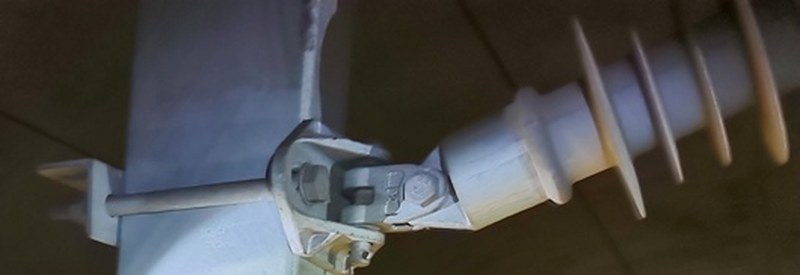
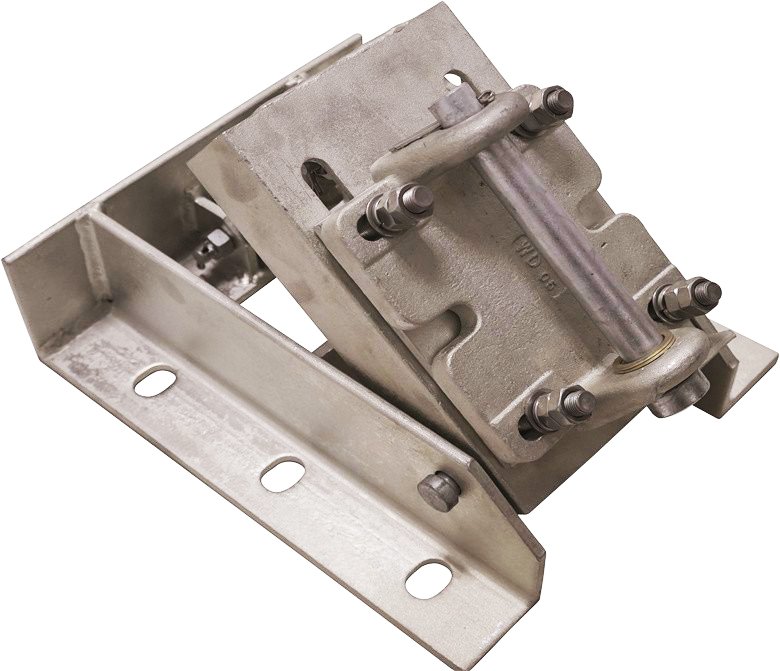
Henan Chuangwit cantilever systems are the support structures that carry the overhead contact suspension from the mast or the tunnel wall to the contact wire. A cantilever support device is a triangulated assembly of tubes and fittings — flat cantilever, inclined cantilever, support brace and their connectors, hanging on a post-top base through the cantilever insulator — that holds the messenger wire at its designed height and hands the contact wire position to the positioning device. It is the single most repeated structure on any electrified line, and its geometry decides pantograph behaviour at every support point.
The range covers both ways projects buy cantilevers: complete speed-class assemblies supplied per design drawing number — steel for 200–250 km/h passenger lines, integral and aluminum assemblies for 300–350 km/h high speed, plus the simplified (unified) steel and aluminum versions — and the individual TB/T 2075 components behind them: cantilever tubes and connectors of Part 1, cantilever bases of Part 2, and the tunnel support devices of Part 22 (bow cantilevers, hanging posts, adjusting bases). Aluminum systems use the φ70×6 6082-T6 tube family with matching AL70 fittings for 250–350 km/h duty.
All components are manufactured under CRCC railway product certification with ISO 9001 quality management, and they run today across China mainline high-speed and conventional networks as well as urban rail viaducts. Matched kits, pre-assembly drawings and site technical guidance are part of the supply — send your OCS cross-sections for a proposal.
Product Groups
- Speed-Class Assemblies — Steel Cantilever Support Assembly (200–250 km/h) · Integral Cantilever Support Assembly (300–350 km/h) · Aluminum Cantilever Support Assembly (300–350 km/h) · Standardized Steel / Aluminum Cantilever Assemblies (300–350 km/h)
- Cantilever Tubes & Connectors (TB/T 2075.1) — 1-1 Flat Cantilever · 1-2 Inclined Cantilever · 1-3 Cantilever Connector · 1-5 Support Brace · 1-6 Support Connector
- Cantilever Bases (TB/T 2075.2) — 2AH / 2AV bases for concrete and steel masts, single to triple cantilever arrangements
- Tunnel Support (TB/T 2075.22) — 22-3 Bow Cantilever (A/B) · 22-5 Tunnel Hanging Post (Y/F) · 22-1A Adjusting Base (die-forged)
Selection Guide
By speed class. 200–250 km/h passenger dedicated lines and below: the steel assembly family with Φ60 galvanized tubes. 250–350 km/h: the aluminum family — integral or standardized assemblies built on the φ70×6 6082-T6 tube set with AL70-series fittings. The speed class of every tube variant is confirmed on its product page.
By structure. Open route: masts with 2AH/2AV cantilever bases, one base per cantilever or multi-cantilever versions in station areas. Tunnels and low-clearance sections: 22-3 bow cantilevers with 22-5 hanging posts and 22-1A adjusting bases, matched to the tunnel cross-section.
By project interface. The assemblies are series products supplied per design drawing number; components are supplied individually for maintenance or incremental erection. Either way, interface dimensions are confirmed against your drawings before manufacture.
Standards & Compliance
| Product design standards | TB/T 2075 series — Fittings for overhead contact system of electrification railway: Part 1 (cantilever support devices), Part 2 (cantilever bases), Part 22 (tunnel support and positioning devices); simplified (unified) cantilever technical requirements |
| International system context | Suitable for overhead contact line projects specified to IEC 60913:2024 (international) and EN 50119:2020 (Europe) |
| Test evidence | CRCC certification and type test reports available on request; additional testing to IEC/EN methods negotiable per project |
Chuangwit cantilever systems are produced under CRCC railway product certification; documentation packages for projects specified to IEC 60913 or EN 50119 are available on request.
Frequently Asked Questions
What is a cantilever support device in railway OCS?
A triangulated tube structure hung on the mast that carries the messenger wire and hands the contact wire position to the positioning device. Its geometry sets the contact wire height and stagger at the support point, and its stiffness decides how the wire behaves as the pantograph passes.
Steel or aluminum cantilever — how to choose?
Steel (Φ60, hot-dip galvanized) covers lines up to 250 km/h economically. Aluminum (φ70×6 6082-T6 with the AL70 fitting family) serves 250–350 km/h high-speed lines and reduces dead load and corrosion exposure. Both are supplied as complete speed-class assemblies.
What changes in tunnels?
Clearance replaces the mast: bow cantilevers (22-3) fixed to hanging posts (22-5) and adjusting bases (22-1A) carry the suspension from the tunnel wall within a compact envelope, per TB/T 2075.22.
Can you supply complete pre-assembled cantilevers?
Yes. Assemblies are matched in interface dimensions for jig pre-assembly, and we supply pre-assembly drawings and site technical guidance with the kits.
What do you need to quote a cantilever package?
Line speed class, mast or tunnel cross-section, cantilever arrangement (single/double/triple), design drawing numbers if available, and quantity. Interface confirmation and type test documentation are provided before manufacture.