10Y Y-type OCS crossing (160-250km/h)
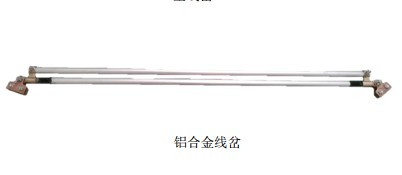
aluminium alloy tube structure L1800
Specifications
| Model | 10Y |
|---|---|
| Standard | TB/T 2075 series and OCS crossing installation technical conditions |
| Design Speed | 160~250km/h (pertype) |
| Operating Temperature | -40℃~+70℃ |
| Altitude | <4000m |
| Materials | Copper alloy limiting tubes, aluminium alloy positioning parts, stainless steel fasteners |
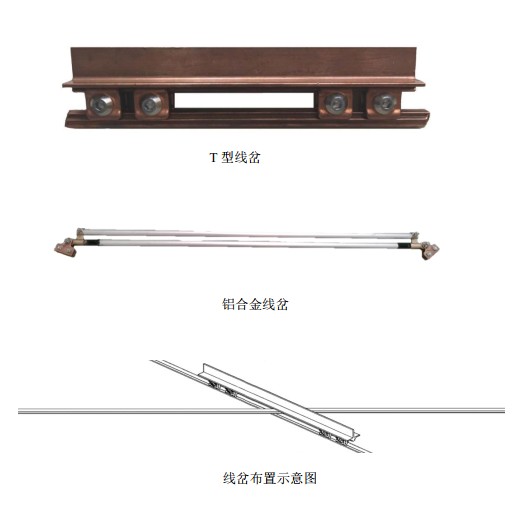
| Installation | Installed where two contact wires cross in turnout sections; S/T/Y types chosen by turnout layout |
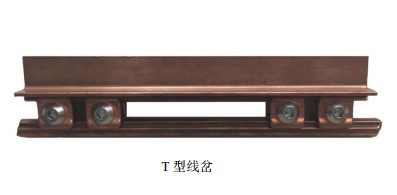
The Y-type OCS crossing consists of a fixing clamp, limiting guide bar, connecting double-eye etc. in an aluminium alloy tube structure, fixing the contact wire where two contact suspensions cross above turnouts. The fixing clamp is CuNi2Si copper alloy; galvanized steel parts are Q235B.
| Structure | aluminium alloy tube structure |
| Guide bar material | 6082 aluminium alloy |
| Length | 1800mm |
| Clearance | 24~27mm |
| Reference mass | 2.2kg |
| Composition | fixing clamp, limiting guide bar, connecting double-eye etc. |
| Component materials | fixing clamp CuNi2Si copper alloy; galvanized steel Q235B |
Performance
Operating Conditions
For station turnout sections, ensuring smooth pantograph transition between two contact wires.
Mechanical Performance
Limiting-tube clearance is precisely controlled by crossing model, eliminating hard points and pantograph-striking risk; all hinged parts rotate freely.
Electrical Performance
Reliable equipotential bonding avoids potential-difference burning at crossings.
Applications
Station turnout areas:
Y-type crossings keep pantograph transition smooth at station throat turnouts.
High-speed mainline turnouts:
Y-type crossings eliminate hard points and contact loss on high-speed turnouts.
Depot lines:
Y-type crossings offer flexible arrangement in dense depot turnout areas.
Junction connecting lines:
Y-type crossings adapt to complex turnout geometry on junction lines.