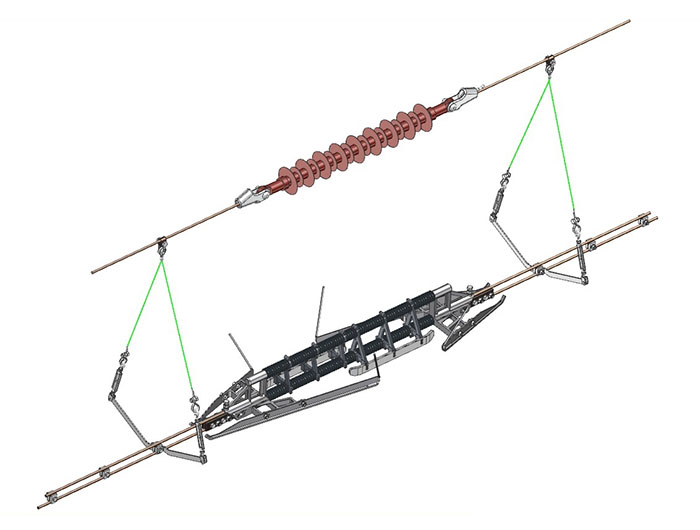
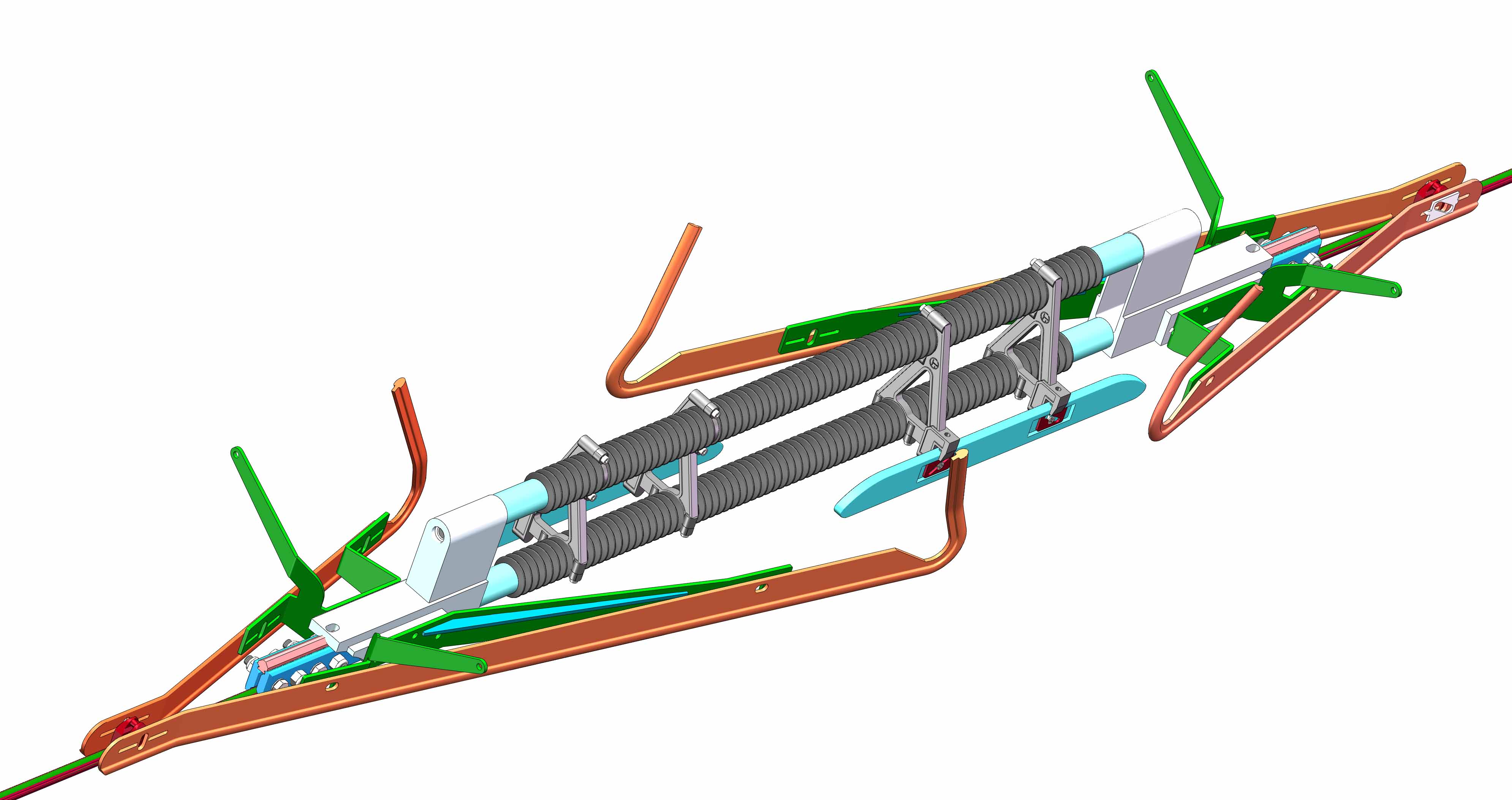
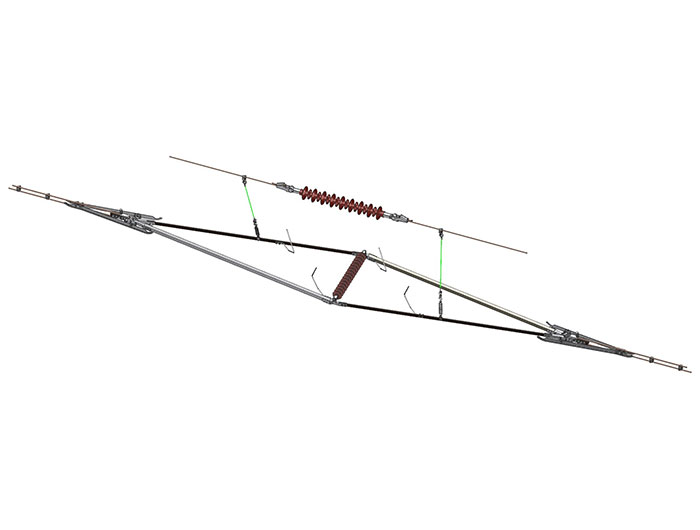
FYFH-1.6AT-Y Wing Section Insulator (25kV AC)
Wing-type (Y-frame) Type A section insulator per TB/T 3036-2016 for 25kV AC railway catenary, up to 160 km/h.
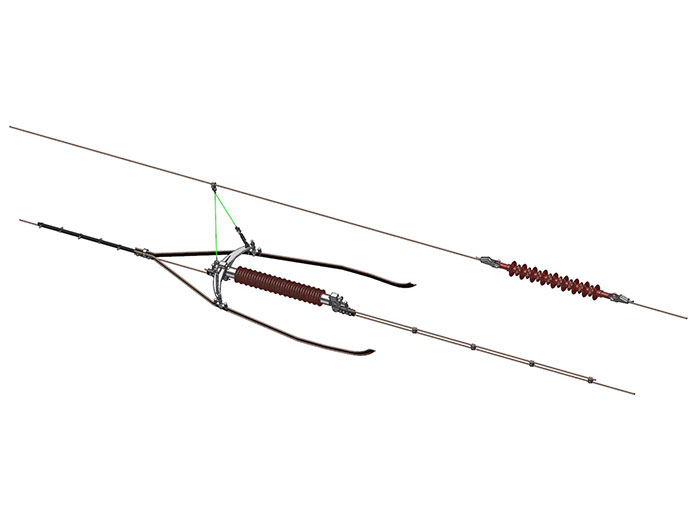
This image shows a representative model of the series; the actual product may vary in appearance.
Specifications
| Model | FYFH-1.6AT-Y |
|---|---|
| Standard | TB/T 3036-2016 Section Insulators for Electrified Railway OCS |
| Rated Voltage | 27.5kV rated (25kV AC 50Hz single-phase traction supply) |
| Design Speed | Up to 160 km/h (depending on sub-model) |
| Operating Temperature | -40°C to +70°C |
| Altitude | ≤ 4,000 m |
| Materials | High-strength aluminum alloy body; arc-resistant insulating elements (silicone rubber / porcelain) |
| Installation | In-line series suspension on the contact wire; both ends mechanically connected to the contact wire |
The FYFH-1.6AT wing-type section insulator (Type A) is built to TB/T 3036-2016 for in-phase electrical sectioning of 25kV AC electrified railway catenary. Its wing-type structure reduces overall weight while maintaining the mechanical and electrical performance required for overhead contact system sectioning points.
The wing profile supports stable pantograph passage with good current collection quality. The insulator combines a high-strength aluminum alloy load-bearing body with arc-resistant insulating elements in silicone rubber or porcelain. Rated voltage is 27.5kV for 25kV AC 50Hz single-phase traction power systems, with an operating temperature range of -40°C to +70°C and altitude capability up to 4,000 m.
Installation follows standard in-line series suspension practice: the unit is inserted into the contact wire run and connected mechanically at both ends. The lightweight wing design simplifies handling during installation and maintenance, particularly at height or in restricted possession windows.
The FYFH-1.6AT-Y is suited to mainline railways, station areas and any 25kV AC OCS location requiring dependable in-phase separation. Design speed is up to 160 km/h depending on the sub-model. Contact Henan Chuangwit Railway Equipment for datasheets, type test reports and project-specific configurations.
Frequently Asked Questions
What is the difference between wing-type and shuttle-type section insulators?
Both provide in-phase electrical separation of the OCS. The wing-type emphasizes lower weight and simpler handling, while the shuttle-type simplifies installation and maintenance. Selection depends on line speed and maintenance preferences.
What standards does the FYFH-1.6AT comply with?
It is designed and type-tested per TB/T 3036-2016 (Section Insulators for Electrified Railway OCS). For international projects we can discuss alignment with EN 50119 OCS requirements.
What is the maximum line speed?
Up to 160 km/h per TB/T 3036-2016 across all sub-models.
Performance
Operating Conditions
Suitable for continuous outdoor service on electrified railways from -40°C to +70°C, at altitudes up to 4,000 m, including humid, rainy and polluted environments.
Mechanical Performance
The wing-type aluminum alloy structure carries the contact wire tensile load with reduced self-weight, easing installation and reducing mechanical stress on supports.
Electrical Performance
Arc-resistant insulating elements provide reliable in-phase separation per TB/T 3036-2016 for 27.5kV systems, verified by electrical withstand and arc-resistance type tests.
Applications
Mainline Railways
In-phase sectioning for 25kV AC trunk lines up to 160 km/h.
Stations & Depots
Sectioning points at stations, depots and sidings where lightweight units ease installation.
Humid & Rainy Regions
Arc-resistant insulation for high-humidity service.
Cold Regions
Reliable operation down to -40°C.